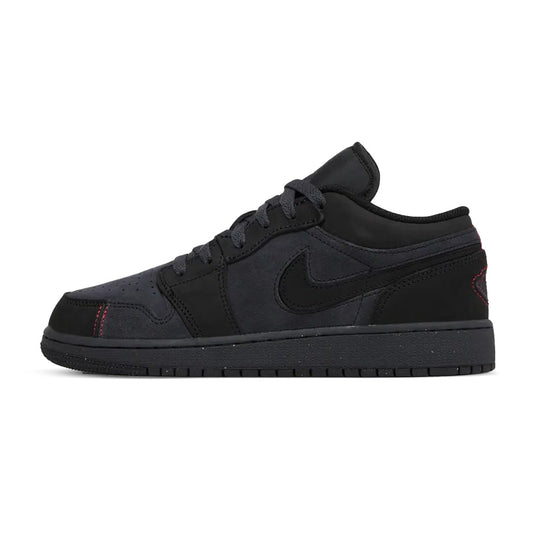
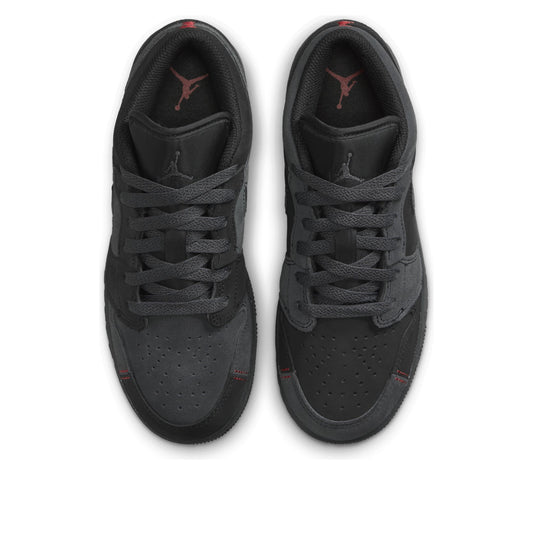
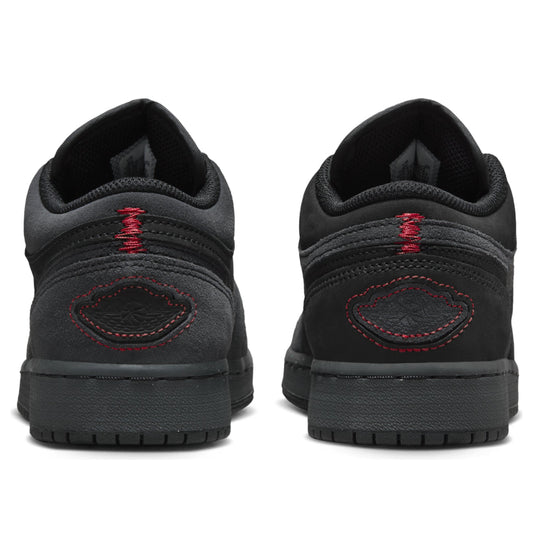
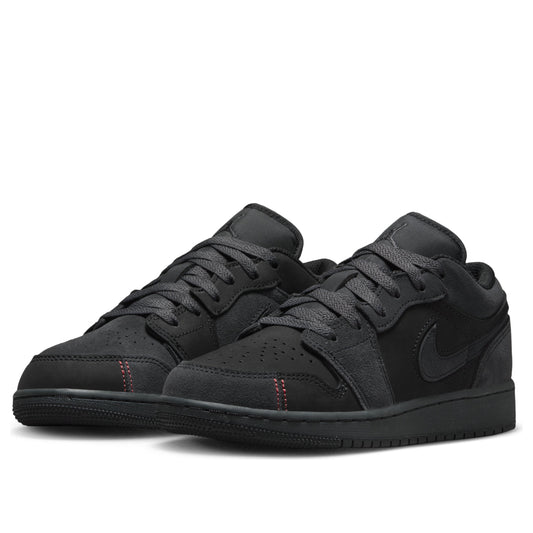
The Most Common Signs of Fake Air Jordan 1s
trainers have been replicated as extensively as the Air Jordan 1.
Since its debut in 1985, the silhouette has become one of the most recognisable trainers in the world, inspiring countless colourways, collaborations and limited releases. Its enduring popularity has also made it a frequent target for counterfeit manufacturers, who continue to improve their ability to reproduce even the smallest details.
For today's buyers, distinguishing an authentic Air Jordan 1 from a convincing replica is no longer as simple as spotting an obvious flaw. Modern counterfeits can reproduce colours, packaging, branding and product information with surprising accuracy, making superficial checks increasingly unreliable.
Authenticating an Air Jordan 1 is therefore less about finding one tell-tale mistake and more about understanding how its shape, materials, construction, branding and provenance work together.
For a broader approach to sneaker authentication, see our guide on how to identify authentic sneakers before you buy.
The most reliable approach is to look for consistency across the entire pair rather than relying on a single authentication detail.
Why Are Air Jordan 1s So Frequently Counterfeited?
The Air Jordan 1 occupies a unique position within sneaker culture.
It appeals to collectors, fashion enthusiasts, basketball fans and first-time buyers alike, creating sustained demand across generations. Limited collaborations with artists, designers and fashion labels have further increased the desirability — and, in some cases, the resale value — of particular releases.
If you're interested in what drives differences in sneaker value, see what makes one pair of sneakers worth more than another.
That combination makes the Air Jordan 1 an attractive target for counterfeit production.
Unlike less commercially significant models, popular Air Jordan 1 releases can command considerable attention long after their original retail launch. Counterfeit manufacturers therefore have a strong incentive to reproduce the colourways and collaborations that buyers actively seek.
The secondary market also adds another layer of complexity.
Some Air Jordan 1s can pass through several owners before reaching a new buyer. Receipts may be lost, boxes may be replaced and accessories can become separated from the original pair. This means provenance can become less straightforward over time.
For that reason, authenticating an Air Jordan 1 should involve both the physical characteristics of the trainers and the circumstances surrounding their sale.
1. Start With the Overall Shape
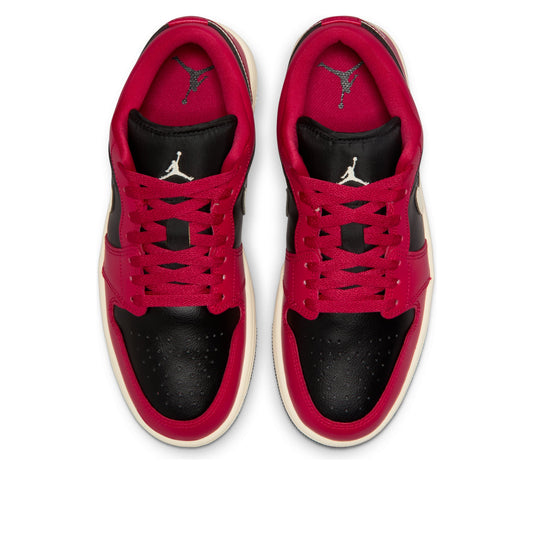
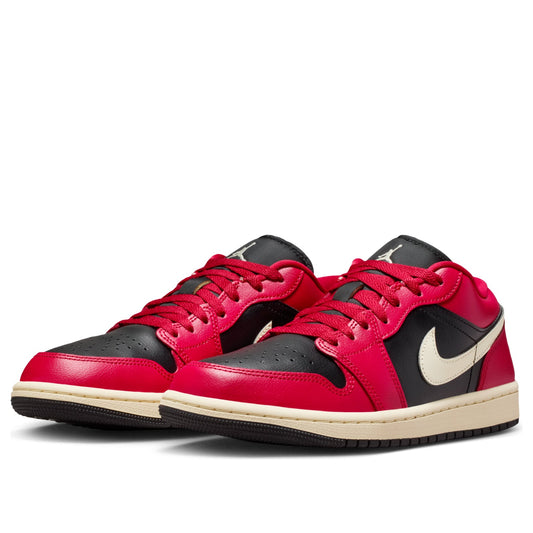
One of the most useful places to begin is also one of the easiest to overlook: the overall silhouette.
Experienced authenticators often assess the shape of a pair before concentrating on individual logos, labels or stitching.
An authentic Air Jordan 1 has proportions that create a distinctive relationship between:
-
The toe box
-
The heel
-
The collar
-
The tongue
-
The leather panels
-
The outsole
-
The overall height and profile
A counterfeit pair may reproduce individual design elements convincingly while getting those proportions subtly wrong.
For example, an unusually bulky toe box, a collar that sits at the wrong angle or a heel with an inconsistent shape can change the appearance of the entire trainer.
These differences may seem minor when viewed individually, but they can become much more noticeable when you compare the complete silhouette with a verified authentic pair.
Why shape matters
Replicating a logo is considerably easier than reproducing the manufacturing processes behind an entire shoe.
The shape of an Air Jordan 1 is influenced by moulds, cutting patterns, materials and assembly processes. When those elements are not reproduced accurately, the result can look subtly different even when the visible branding appears convincing.
This is why the overall shape should be considered before you start looking for individual "tells".
2. Examine the Leather and Other Materials
Colour is one of the first things many buyers compare, but the quality and behaviour of the materials can provide much more useful information.
Understanding materials and construction more broadly can also help explain what makes a premium sneaker truly premium.
Air Jordan 1 releases can use different materials and finishes depending on the particular model and colourway. Depending on the release, you may encounter:
-
Smooth leather
-
Tumbled leather
-
Suede
-
Nubuck
-
Textile panels
-
Synthetic materials
There is therefore no single texture that every authentic Air Jordan 1 should have.
Instead, compare the materials with what is expected for the specific release you are examining.
Look at:
-
Texture
-
Grain
-
Flexibility
-
Surface finish
-
Density
-
Consistency between panels
Counterfeit manufacturers may reproduce a colour accurately while struggling to reproduce the texture, density or behaviour of the genuine material.
Leather that appears unusually glossy, excessively stiff or artificially textured may warrant further investigation.
However, remember that material variation can also occur between legitimate releases and production runs. One difference should never be treated as definitive proof of a counterfeit.
3. Look Closely at the Stitching
Stitching can provide another useful layer of evidence.
On a genuine pair, stitching should generally appear consistent with the construction of the particular model.
Look for:
-
Even stitch spacing
-
Consistent thread tension
-
Clean finishing
-
Correct panel alignment
-
Consistent stitching across both trainers
However, do not fall into the trap of believing that authentic Air Jordan 1s must have absolutely perfect stitching.
Genuine products can have minor manufacturing variations.
The more useful question is whether the stitching makes sense as part of the overall construction.
A counterfeit may reproduce an apparent stitch count while failing to reproduce the way the stitching interacts with the surrounding leather and panels.
Look at the whole construction rather than counting individual stitches in isolation.
4. Check the Wings Logo — But Don't Stop There
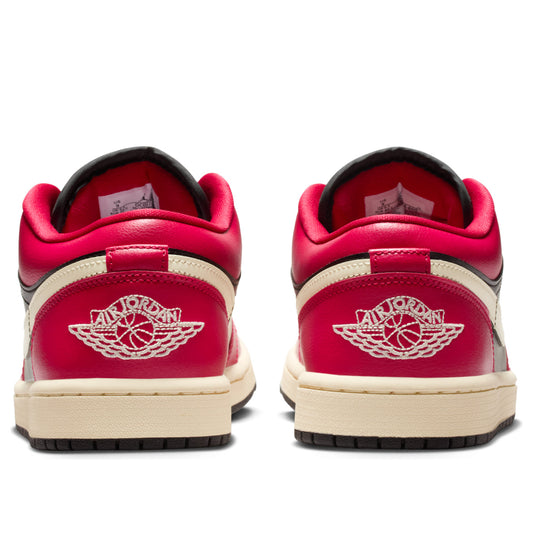
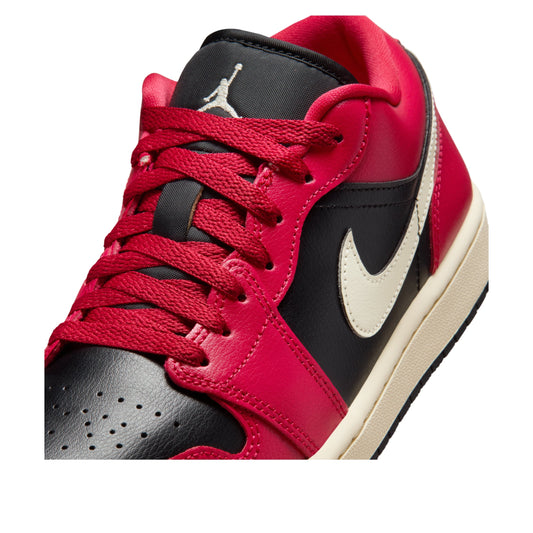
The Wings logo is one of the most frequently discussed details when people talk about authenticating Air Jordan 1s.
It can certainly provide useful information.
On an authentic pair, you would expect the logo to have:
-
Clear embossing
-
Defined edges
-
Balanced proportions
-
Consistent placement
-
Appropriate depth
But there is an important caveat:
A convincing Wings logo does not prove that an Air Jordan 1 is authentic.
Modern replicas can reproduce individual branding details remarkably well.
The logo should therefore be assessed alongside:
-
The surrounding leather
-
Panel shape
-
Stitching
-
Overall silhouette
-
Placement
-
Construction quality
Think of the Wings logo as one piece of evidence, not an authentication certificate.
5. Check the Size Tag and Style Code
The internal size tag and product information can provide valuable reference points.
Depending on the specific release, examine:
-
Style code
-
Size information
-
Colour description
-
Manufacturing details
-
Other product identifiers
The information should be consistent with the official release you are examining.
But once again, there is an important limitation:
A genuine style code does not prove that the trainers are genuine.
Counterfeit manufacturers can copy legitimate identifiers from authentic products.
A replica can therefore display a real style code while the physical trainers themselves remain counterfeit.
Use the label to establish whether the information makes sense, then compare it with the rest of the pair.
6. Examine the Box and Packaging
The box can provide useful supporting evidence.
Look at:
-
Box construction
-
Printing quality
-
Label placement
-
Typography
-
Product information
-
Colour consistency
-
Correspondence between the box and the trainers
The product information should make sense for the particular Air Jordan 1 release.
However, packaging should never be treated as conclusive proof.
Counterfeit manufacturers have become increasingly capable of reproducing boxes and labels that look convincing at first glance.
A genuine-looking box can support an authentication assessment, but it cannot compensate for inconsistencies in the trainers themselves.
The best approach is:
Let the packaging support your assessment, rather than determine it.
7. Don't Let the Price Decide for You
Price can provide useful context, but it is not an authentication method.
An unusually low price may justify further investigation, particularly for a highly sought-after release.
But legitimate sellers can have perfectly valid reasons for selling below the prevailing market price. Equally, counterfeit sellers may deliberately price replicas close to genuine market values to avoid attracting suspicion.
Instead of asking:
"Is this Air Jordan 1 too cheap?"
look at the complete situation:
-
Who is selling the pair?
-
Where did it come from?
-
Is the price realistic for the release?
-
Does the condition match the asking price?
-
Does the physical product appear consistent?
-
Does the seller provide convincing provenance?
Price should increase or decrease your level of scrutiny, not determine your conclusion.
8. Pay Attention to the Seller
When buying an Air Jordan 1, the seller is part of the authentication process.
A trustworthy seller should generally be comfortable providing reasonable information about the pair and answering questions about its origin.
Consider:
-
How long the seller has been operating
-
Whether they provide clear contact information
-
Whether the listing includes detailed photographs
-
Whether the description is consistent
-
Whether they can explain where the trainers came from
-
Whether they are willing to provide additional information when reasonably requested
Be particularly cautious if a seller:
-
Avoids reasonable questions
-
Refuses to provide additional photographs
-
Gives inconsistent explanations
-
Applies excessive pressure to complete the purchase
-
Has an unusual quantity of highly sought-after releases
-
Cannot explain the provenance of the pair
None of these factors proves that an Air Jordan 1 is counterfeit.
But when several concerns appear together, they should not be ignored simply because the trainers look convincing.
9. Consider Provenance and Documentation
For highly collectible Air Jordan 1s, provenance can provide useful additional context.
Depending on the circumstances, documentation might include:
-
Original receipts
-
Order confirmations
-
Retail purchase information
-
Previous ownership records
Documentation is particularly useful when it creates a coherent history for the pair.
However, it is important to understand its limitations.
A receipt does not authenticate the physical trainers by itself, just as the absence of a receipt does not automatically mean the pair is fake.
Documentation should therefore complement the physical assessment, not replace it.
The strongest picture is created when the provenance, seller, product information and physical characteristics all tell a consistent story.
10. Don't Assume Every Difference Means "Fake"
This is an important distinction when authenticating Air Jordan 1s.
Genuine trainers can show minor variations caused by:
-
Different production runs
-
Manufacturing tolerances
-
Material variation
-
Factory processes
-
Storage
-
Age
-
Wear
For example, slight differences in leather grain or stitching do not necessarily mean that one pair is counterfeit.
The key is to distinguish between:
a normal manufacturing variation
and
a pattern of inconsistencies that does not correspond with the genuine release.
This is one reason why authentication based on a single photograph or online checklist can be misleading.
11. Compare With Reliable References
If you are unsure about a pair, compare it with reliable references for the same Air Jordan 1 release.
Useful references can include:
-
Official Nike imagery
-
Established authorised retailers
-
Reputable sneaker publications
-
Verified authentic pairs
-
Detailed references from trusted authentication resources
Compare multiple characteristics:
-
Overall shape
-
Toe box
-
Collar
-
Leather
-
Panel proportions
-
Stitching
-
Wings logo
-
Labels
-
Sole
-
Packaging
Avoid relying on a single photograph.
Different lighting, camera angles and production variations can make otherwise genuine pairs appear slightly different.
The more reliable references you use, the easier it becomes to identify meaningful inconsistencies.
If you're looking to buy an authentic Air Jordan 1, comparing current availability and prices with a trusted retail source can be a useful final step before making a purchase. For example, you can shop the Air Jordan 1 Retro High OG Chicago Lost & Found and review its current details before deciding.
12. Don't Rely on Online "One-Detail" Authentication
One of the biggest problems with online sneaker authentication is the idea that every model has one secret detail that instantly separates genuine pairs from fakes.
In reality, authentication is rarely that simple.
You may encounter claims about:
-
A particular stitch
-
A specific font
-
The shape of one letter
-
A particular box detail
-
A specific shade
-
A particular code
These details can sometimes be useful.
But they should never be treated as universal rules.
Different Air Jordan 1 releases can have legitimate differences, and counterfeit production continues to evolve.
A better approach is to understand how multiple details fit together.
13. Develop Your Eye for Authentic Air Jordan 1s
Authenticating Air Jordan 1s becomes easier with experience.
Collectors who regularly handle genuine pairs develop an understanding of:
-
Shape
-
Materials
-
Construction
-
Branding
-
Proportions
-
Manufacturing variation
-
Release history
This is difficult to replicate through a single checklist because each release can introduce its own characteristics.
The more authentic pairs you study, the easier it becomes to recognise what looks and feels consistent with genuine production.
Instead of trying to memorise every possible counterfeit "tell", focus on learning what an authentic Air Jordan 1 should look like as a complete product.
Authenticity Comes From the Complete Picture
Perhaps the biggest mistake buyers make is looking for one feature that can definitively confirm authenticity.
There isn't one.
A correctly shaped Wings logo cannot compensate for questionable materials.
A genuine style code cannot guarantee authentic construction.
A convincing box cannot prove where the trainers came from.
Likewise, one imperfect stitch does not automatically make a genuine pair counterfeit.
The most reliable approach is to evaluate the relationship between:
-
Shape
-
Materials
-
Construction
-
Branding
-
Labels
-
Packaging
-
Provenance
-
Seller credibility
-
Release information
When those elements consistently support one another, confidence in the pair increases.
When several elements contradict one another, it is time to investigate further or seek professional authentication.
The Air Jordan 1 has remained an icon for decades because of its design, cultural importance and place in sneaker history.
To understand how the model became such an enduring part of sneaker culture, explore why Air Jordan became a cultural icon.
Learning to recognise the details that make an authentic pair distinctive can help buyers protect themselves from counterfeits while developing a deeper appreciation for one of the most influential trainers ever produced.
Frequently Asked Questions
How can you tell if Air Jordan 1s are fake?
There is no single foolproof check. Examine the overall shape, materials, stitching, branding, labels, packaging, provenance and seller together. The strongest authentication decisions are based on multiple consistent pieces of evidence.
Does the Wings logo prove that Air Jordan 1s are authentic?
No. The Wings logo can provide useful information, but high-quality replicas can reproduce individual branding details convincingly. It should always be assessed alongside the rest of the trainer.
Can a fake Air Jordan 1 have a genuine style code?
Yes. Counterfeit manufacturers can copy legitimate style codes from genuine releases. A matching style code therefore does not prove authenticity.
Does a genuine Air Jordan 1 always have perfect stitching?
No. Genuine trainers can have minor manufacturing variations. The important consideration is whether the overall construction is consistent with the specific release.
Does the original box prove that an Air Jordan 1 is real?
No. Counterfeit packaging can look convincing. The box should support the wider authentication assessment rather than determine it.
Is a cheap Air Jordan 1 automatically fake?
No. Price alone cannot determine authenticity. A low price should encourage further investigation, but legitimate sellers may have valid reasons for pricing a pair below the prevailing market value.
Can you authenticate Air Jordan 1s from photographs?
Photographs can provide useful evidence, but they may not always be sufficient for a definitive assessment. Material feel, construction and provenance can be difficult to establish from images alone.
What should I do if I'm still unsure about a pair?
If multiple details concern you and you cannot establish a clear answer, consider pausing the purchase and seeking additional evidence or professional authentication, particularly for rare or expensive releases.