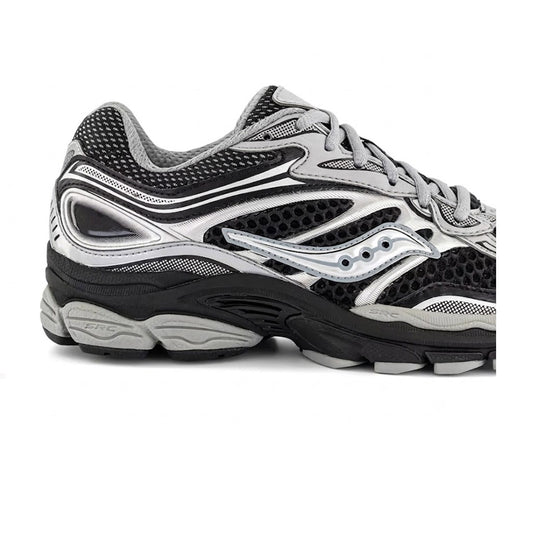
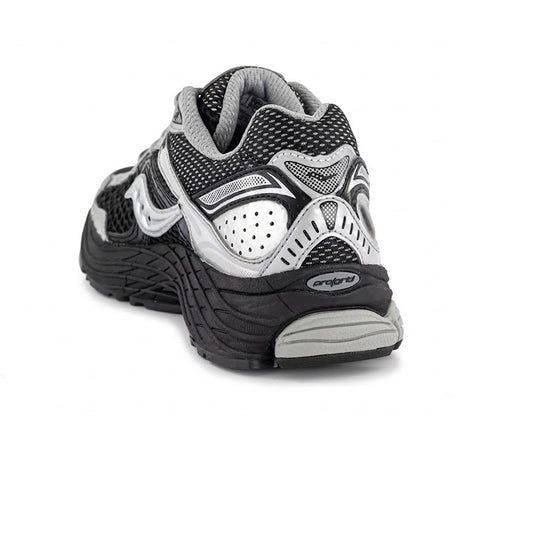
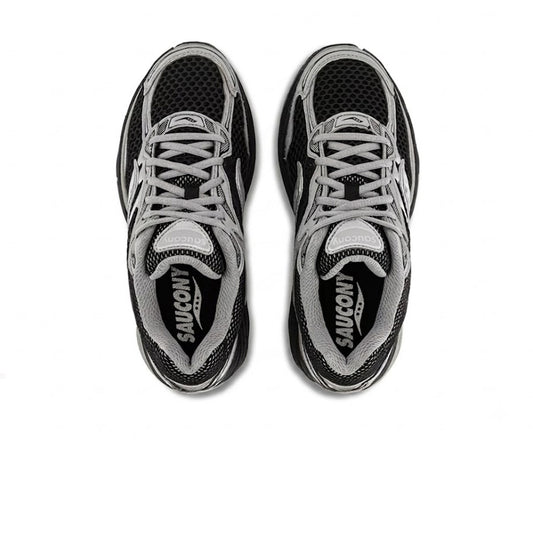
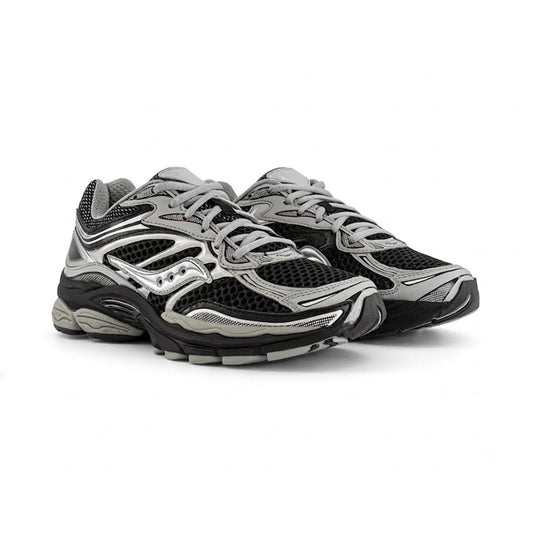
What Makes a Premium Trainer Truly Premium?
A high price does not automatically make a trainer premium. Neither does a luxury logo.
A limited release can be expensive because demand exceeds supply. A collaboration can command a premium because of cultural relevance. A rare colourway can trade far above retail because collectors want it. None of those things necessarily tells you how well the trainer was made.
A genuinely premium trainer earns its position through the relationship between materials, construction, craftsmanship, design, comfort and finishing — and how consistently those elements work together.
That distinction matters because premium can describe everything from an upgraded version of a classic silhouette to a handcrafted luxury trainer, a Made in UK or Made in USA release, or simply a product carrying a higher price.
So how can you tell the difference?
You need to look beyond the box.
What Actually Makes a Trainer Premium?
A premium trainer usually combines several qualities rather than relying on one impressive feature. Materials should suit the design, construction should be precise, stitching and finishing should be controlled, and the fit should make sense for the intended use.
The important word is coherence.
Expensive leather cannot rescue poor construction. Perfect stitching cannot compensate for uncomfortable proportions. A famous logo cannot turn mediocre materials into exceptional ones.
The strongest premium trainers feel considered as complete objects. Their individual components support the same idea rather than simply being expensive features placed together.
Materials Matter — But They Are Only the Starting Point
Materials are one of the easiest differences to notice. Premium footwear may use high-quality leather, carefully selected suede or nubuck, technical textiles, engineered mesh, quality rubber compounds or specialised linings.
But simply reading leather on a product description tells you very little.
Leather varies in thickness, grain, treatment, flexibility, finish and consistency. The same applies to suede. One may feel dense and rich, while another feels thin or inconsistent.
Technical materials require a different evaluation.
For a closer look at how leather, suede, mesh and other materials affect trainer quality and performance, our sneaker materials guide provides a useful starting point.
A lightweight engineered mesh may not feel luxurious in the traditional sense, but it can still be premium if it performs exceptionally well for its intended purpose.
This gives us an important rule:
Premium material does not mean the most expensive material. It means the right material, used well.
Full-Grain Leather Doesn't Automatically Mean Better
Terms such as full-grain, top-grain, suede and nubuck can provide useful information, but they should not become shortcuts for judging quality.
A full-grain leather can be excellent. That does not automatically make a trainer using it better than one built with high-quality suede, mesh or technical textiles.
A luxury lifestyle trainer and a technical running-inspired silhouette are solving different problems. Judging both according to how luxurious their leather feels would make little sense.
Quality should always be evaluated in context.
Construction Shows How Good the Materials Really Are
A trainer can photograph beautifully and still be poorly made.
Construction is where individual materials become a functioning object. Look at how the upper meets the sole, how panels align, how stitching follows the design, how layers overlap and how the lining and other components sit inside the shoe.
Nothing needs to be absolutely invisible. It needs to feel intentional.
Poor alignment, inconsistent stitching or careless bonding can reveal compromises that are difficult to see in marketing photography. Construction also affects what happens when the trainer is actually worn.
The relationship between the upper, internal structure, midsole and outsole influences flexibility, stability, comfort and durability.
A premium trainer therefore needs to work structurally, not just aesthetically.
Stitching, Alignment and Finishing Reveal Attention to Detail
Stitching is one of the most accessible quality indicators because you can inspect it without specialist equipment.
Look for relatively consistent stitch length, clean changes in direction, alignment with panel edges, secure finishing and minimal loose threads. Compare corresponding areas of the left and right shoe as well.
But premium craftsmanship should not be confused with mathematical perfection.
Handmade and specialist footwear can contain small variations. The relevant question is whether those variations reflect the manufacturing process or careless execution.
The same principle applies to panel alignment and finishing.
Do corresponding panels sit at similar heights? Does branding appear correctly positioned? Do overlays follow the intended shape? Are the edges clean? Is excess adhesive visible? Do surface treatments appear consistent?
No individual detail proves quality on its own.
Premium quality reveals itself through the accumulation of controlled details.
Look Beyond the Upper
One of the easiest mistakes is evaluating almost the entire trainer through its exterior.
Premium quality extends inside and underneath the shoe.
Consider the lining, tongue, collar, footbed, internal seams, cushioning, midsole, outsole and the way those components are attached.
A trainer may use beautiful suede externally while compromising on less visible components. That does not automatically make it poor quality, but it affects how complete the premium proposition really is.
The details people rarely photograph can sometimes tell you more than the details used in advertising.
Premium should survive closer inspection.
Comfort Is Part of Quality
A premium trainer is still footwear.
Comfort can depend on last shape, fit, cushioning, flexibility, weight, support, breathability and internal construction. But premium comfort does not necessarily mean maximum softness.
A structured leather trainer should not be judged by exactly the same standards as a New Balance 990 or a technical running-inspired silhouette.
The relevant question is whether the physical experience makes sense for what the trainer is designed to be.
Fit matters just as much. Toe room, heel security, width and pressure points all affect how thoughtfully a shoe interacts with the foot.
Different people have different feet, so fit can never be a universal quality score. But good footwear design should account for the relationship between the shoe and the body.
Premium comfort is not maximum cushioning. It is considered function.
Durability Is About How a Trainer Ages
Premium does not mean indestructible.
Leather creases. Suede changes. Rubber wears. Foam compresses. Textiles collect marks. That is normal.
The better question is:
Does the trainer age convincingly?
Good materials and thoughtful construction should allow a shoe to maintain its structural and visual integrity through reasonable use.
Some materials can even become more attractive with age. Leather can develop character, while suede can change texture and acquire a more individual appearance.
That is very different from premature failure such as separation, cracking, structural collapse or poor bonding.
Premium durability is therefore not about remaining new forever.
It is about remaining a good version of itself as it gets older.
Design Matters as Much as Materials
Imagine taking exceptional leather and applying it to a poorly proportioned silhouette.
Would the result automatically be premium?
No.
Materials and craftsmanship need design direction. Proportion, panel placement, material transitions, colour relationships, branding, hardware and sole shape all contribute to how resolved a trainer feels.
The strongest premium trainers rarely feel as though expensive elements were simply added to justify the price.
Everything supports the same idea.
That coherence is one of the clearest differences between a genuinely considered product and one that simply looks expensive.
Premium Can Mean Different Things in Different Trainers
There is no single premium formula.
A premium heritage trainer might express quality through high-grade suede or leather, traditional construction, manufacturing heritage and careful finishing.
A premium technical trainer may demonstrate quality through engineered materials, advanced cushioning, lightweight construction and performance research.
A luxury fashion trainer may combine materials and craftsmanship with design, brand heritage, exclusivity and fashion positioning.
All three can legitimately be premium.
But they should not be evaluated using exactly the same criteria.
This is why the question “Which trainer uses the most expensive material?” is much less useful than:
“How well does this trainer execute what it is trying to be?”
Does Manufacturing Location Matter?
Manufacturing origin can contribute to a premium product story, but it should not be treated as automatic proof of superior quality.
New Balance provides a useful example. Certain premium models continue to be produced through its Made in UK operation in Flimby and Made in USA programme.
Those labels can represent manufacturing heritage, local production and a connection to particular product families.
But manufacturing location is context, not a quality guarantee.
Execution still determines quality.
The same principle applies to the word handmade. Human involvement does not automatically guarantee superior execution, just as machine-assisted manufacturing does not automatically mean lower quality.
Modern footwear often combines human assembly, industrial stitching, moulding, adhesives, automated processes and specialist finishing.
The important question is not whether a machine was involved.
It almost certainly was.
The question is whether the appropriate manufacturing process was used well.
Brand Prestige Is Not the Same as Product Quality
A prestigious brand can make a trainer more desirable. That is real value.
But it is a different kind of value.
A luxury name can contribute heritage, recognition, status, scarcity, cultural relevance or collectability. Those factors can influence what someone is willing to pay without necessarily proving that the physical trainer is better made.
A relatively understated trainer can be exceptionally well constructed without attracting comparable cultural attention.
This creates three useful questions:
Product quality: How well was this made?
Cultural value: What does this trainer mean?
Market value: What are people willing to pay for it?
Those questions can produce completely different answers.
That is why understanding what makes one pair of trainers worth more than another requires looking beyond physical construction alone.
Expensive, Premium, Rare and Collectable Are Not the Same
These terms are often treated as interchangeable, but they describe different things.
Expensive describes price.
Premium describes elevated product quality, design, construction or execution.
Rare describes limited availability.
Hyped describes intense current attention.
Collectable describes an object people value enough to acquire, preserve or document.
Luxury describes a broader positioning that can combine physical and intangible qualities with brand prestige.
One trainer can occupy several of these categories simultaneously, but it does not have to.
A rare trainer can be poorly constructed. A beautifully made trainer can have little resale value. A culturally important trainer may use relatively ordinary materials.
Understanding these differences makes it easier to understand what you are actually paying for.
Does a Higher Price Mean Better Quality?
Not necessarily.
Price can reflect materials, manufacturing, research and development, distribution, marketing, brand prestige, scarcity, collaboration, demand and retail positioning.
Only some of those factors directly improve the physical trainer.
This does not mean expensive trainers are poor value. It means the price needs to be understood.
A £500 trainer may contain exceptional craftsmanship. It may also contain a significant brand premium. Usually, it contains some combination of both.
The useful question is not simply:
“Why is this expensive?”
It is:
“Which parts of this price are visible in the product itself?”
A Simple Way to Judge Premium Quality
When examining a trainer in person, start with the basics.
Touch the materials and consider whether they feel appropriate and consistent. Compare both shoes for panel alignment, proportions and branding. Follow the stitching and inspect how different materials meet.
Look inside the trainer as well as outside it. Examine the lining, footbed, tongue and internal construction. Check the sole attachment and overall structural coherence.
Then try the trainer on.
Does the fit make sense for its intended purpose? Does the construction support the way the trainer is supposed to be used?
Finally, ask what you are actually paying for.
Is it better material? Craftsmanship? Technology? Manufacturing heritage? Design? Scarcity? Brand prestige? Collaboration?
And then apply one particularly useful test:
Remove the logo mentally. Would the product still feel well made?
A genuinely premium trainer should have qualities you can appreciate before you look at the name on the box.
Can You Judge Premium Quality Online?
It is harder, but useful evidence still exists.
Look for product information that clearly explains materials, construction, manufacturing origin where relevant, technology and design features. Detailed product photography can also reveal stitching, material transitions and finishing that generic promotional images hide.
Be cautious when the entire premium proposition relies on words such as exclusive, luxury, rare or premium without explaining what physically distinguishes the product.
For high-value purchases, trusted sourcing matters as well. Quality is only relevant if the product is what it claims to be.
That also creates an important distinction between quality and authentication.
A trainer can be authentic without being exceptionally constructed. Authentication asks whether the product is genuine. Quality asks how well the genuine product was made.
Both questions matter, but they are not the same question.
Does Premium Mean a Trainer Will Hold Its Value?
No.
Physical quality and resale value are connected only indirectly.
A beautifully made trainer can lose value, while a relatively ordinary trainer can trade far above retail because of extreme scarcity or cultural demand.
Secondary-market value can depend on rarity, collaboration, cultural relevance, size, condition, historical importance, demand and timing.
Craftsmanship may contribute to desirability, but it does not guarantee financial appreciation.
Similarly, a trainer can become highly collectable for cultural or historical reasons without being the most technically advanced product in its category.
What Should You Pay More For?
Paying more can make sense when the additional cost gives you something you genuinely value.
That might be better materials, better construction, more considered comfort, manufacturing heritage, technical innovation, distinctive design, limited production or cultural significance.
The key is understanding which one.
A buyer interested primarily in craftsmanship should evaluate differently from a collector interested in rarity. A runner will prioritise different qualities from someone buying luxury streetwear.
Premium only becomes meaningful when it is premium in a way that matters to the person buying it.
The Best Premium Trainers Feel Coherent
This is ultimately the most useful test.
A genuinely premium trainer feels like its decisions belong together.
The materials make sense. The construction supports them. The shape feels intentional. The finishing respects the design. The comfort matches the intended use. The details reward inspection.
And the product still makes sense when the branding is removed from the conversation.
That coherence is difficult to fake.
It cannot be created by price alone. It cannot be guaranteed by a collaboration. And it cannot be printed onto a box by adding the word premium.
A premium trainer does not simply cost more.
It gives you more reasons to understand why it costs more.
How to Tell If a Trainer Is Truly Premium
Understanding what makes a trainer genuinely premium comes down to looking beyond price and branding. These are some of the key questions to consider when assessing quality, materials and construction.
What makes a trainer premium?
A premium trainer is defined by the overall quality and coherence of its materials, construction, craftsmanship, design, comfort and finishing rather than by price or branding alone. High-quality materials should be appropriate to the trainer's purpose, while stitching, panel alignment, sole construction, internal components and finishing should demonstrate consistent attention to detail. Premium footwear should also perform well for its intended use and maintain its structural integrity over time. Manufacturing heritage, technical innovation or luxury positioning can contribute to a premium product, but none is proof of quality by itself. Ultimately, a genuinely premium trainer feels considered as a complete object, with its materials, construction and design working together rather than relying on one expensive feature.
Are expensive trainers always better quality?
No. A high price does not automatically mean that a trainer is better made. Retail prices can reflect many factors that are separate from physical quality, including brand prestige, scarcity, collaborations, marketing, cultural relevance, distribution costs and consumer demand. To evaluate actual quality, look at the materials, construction, stitching, finishing, internal components, fit, comfort and durability. A luxury trainer may command a high price partly because of its brand positioning, while a less expensive trainer may offer excellent construction and materials. The most useful question is therefore not simply “Why is this trainer expensive?” but “Which parts of its price are reflected in the physical product?”
How can you tell if trainers are good quality?
You can assess trainer quality by examining several areas together rather than relying on a single feature. Start with the materials and check whether they feel appropriate, consistent and suitable for the intended use. Inspect stitching for controlled execution, examine whether panels and branding are properly aligned, and look closely at edges, seams and material transitions for careless finishing or excess adhesive. Look inside the trainer as well, including the lining, tongue, footbed and internal construction. The sole attachment and overall structure should also feel coherent. Finally, consider fit, comfort and how the materials are likely to age. Good-quality trainers demonstrate consistency across materials, construction, finishing and function.
Is leather always better for premium trainers?
No. Leather is not automatically superior to every other footwear material. High-quality leather can provide durability, a distinctive appearance and the ability to develop character with age, but its suitability depends on the trainer's design and intended purpose. Premium footwear can also use high-quality suede, nubuck, engineered mesh, technical textiles, specialist synthetics and advanced rubber compounds. A technical trainer, for example, may be better served by lightweight engineered materials than by heavy leather. Even terms such as full-grain leather should not be treated as automatic proof of superior quality. The best material is the one that performs and looks appropriate for what the trainer is designed to achieve.
Does Made in UK mean better quality?
Not automatically. A Made in UK label can indicate manufacturing heritage, local production and a connection to particular footwear traditions, but the country of manufacture alone does not guarantee superior quality. The actual materials, construction methods, craftsmanship, finishing and quality control of the individual trainer still matter. New Balance's Made in UK and Made in USA programmes, for example, can add manufacturing heritage and reinforce the positioning of certain premium models, but those labels should be considered alongside the product itself. Manufacturing location provides context; execution determines quality. This is why a trainer should be evaluated by how well it is made rather than by its country-of-origin label alone.