Saucony Trainer Models Explained: Which One Is Right for You?
Saucony can be surprisingly difficult to understand if you only know the brand by name. One model looks like a modern running shoe, another feels pulled directly from the early 2000s, while others come from the same running heritage but now make just as much sense with denim, cargos or relaxed tailoring.
That is what makes Saucony interesting. The brand sits somewhere between running performance, archive design and contemporary trainer culture, so understanding its models is less about finding one universally better trainer and more about recognising what each part of the range was designed to do.
For lifestyle buyers, the conversation usually begins with models such as the ProGrid Omni 9, ProGrid Guide 7, Ride Millennium and Shadow families. For runners, modern ranges including Ride, Triumph, Guide and Endorphin tell a different part of the Saucony story. Looking at both sides makes the brand much easier to navigate.
Understanding Saucony's Different Trainer Families
Saucony's range makes more sense when you stop treating every model as though it belongs to the same category. Some silhouettes are rooted in the brand's archive and are now particularly relevant to contemporary trainer culture, while others remain firmly focused on modern running.
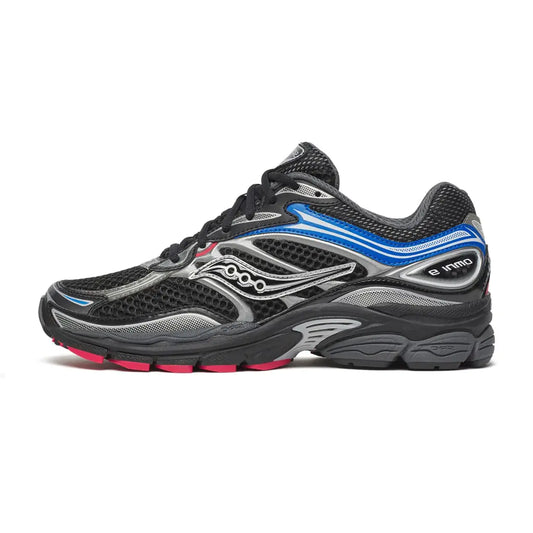
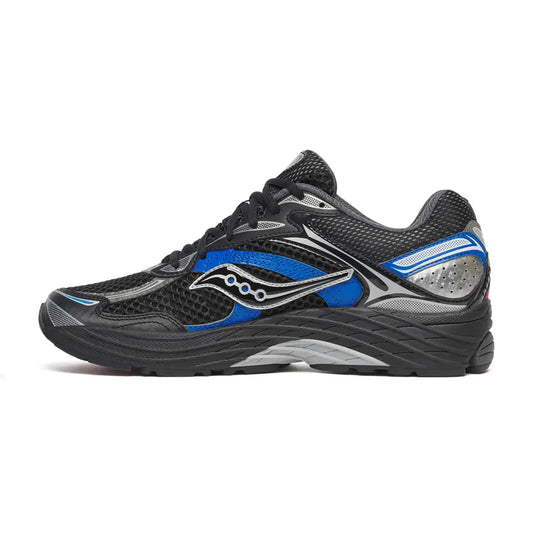
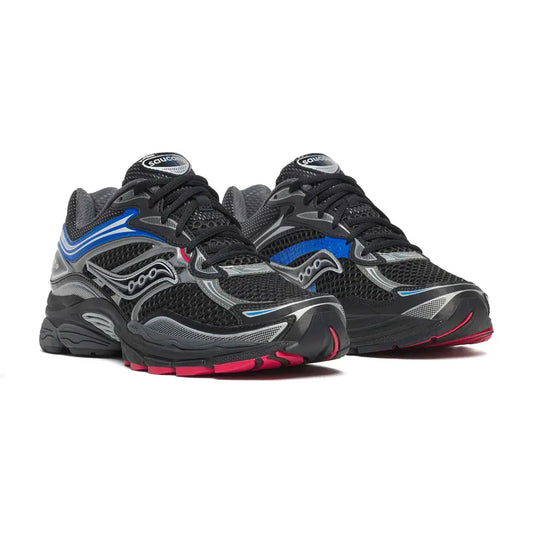
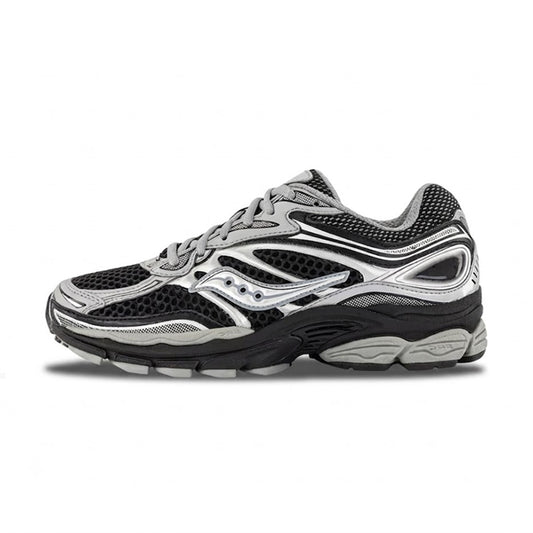
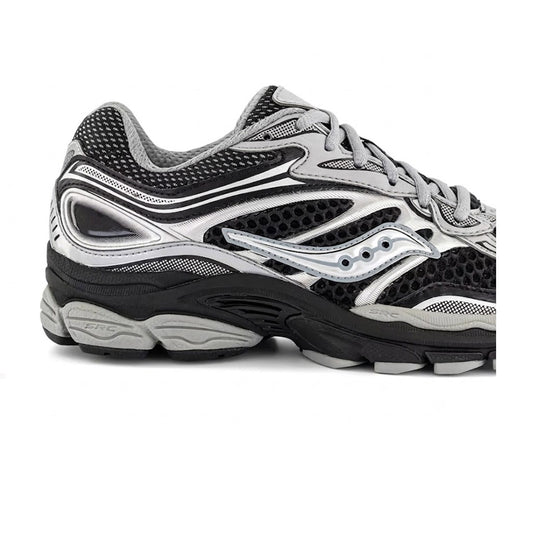
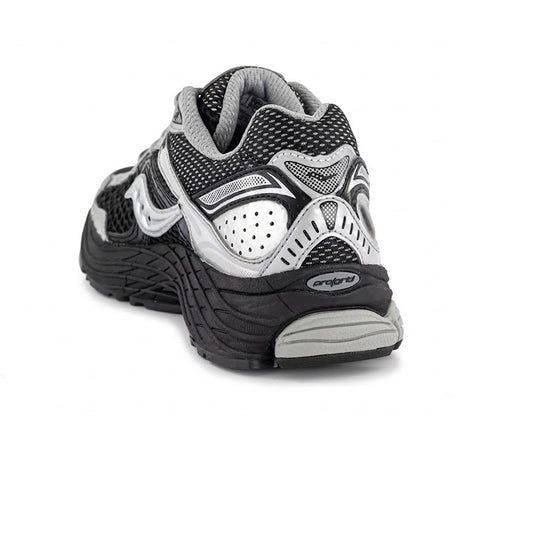
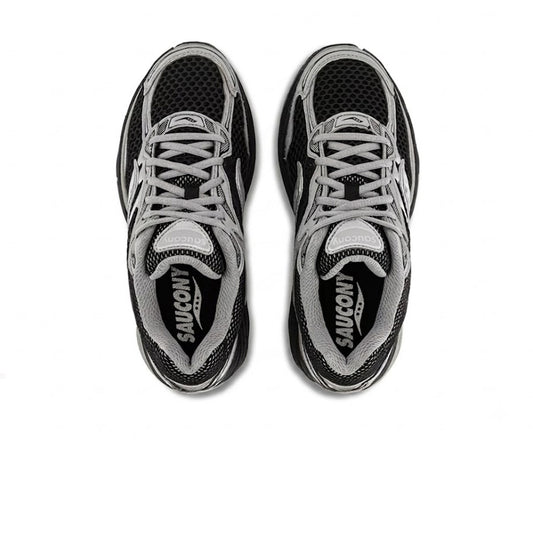
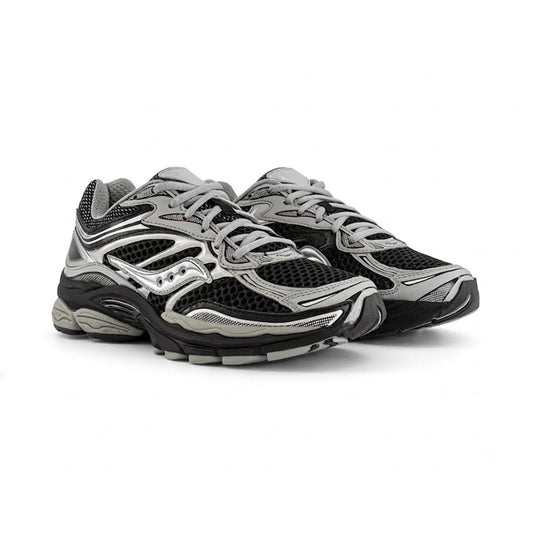
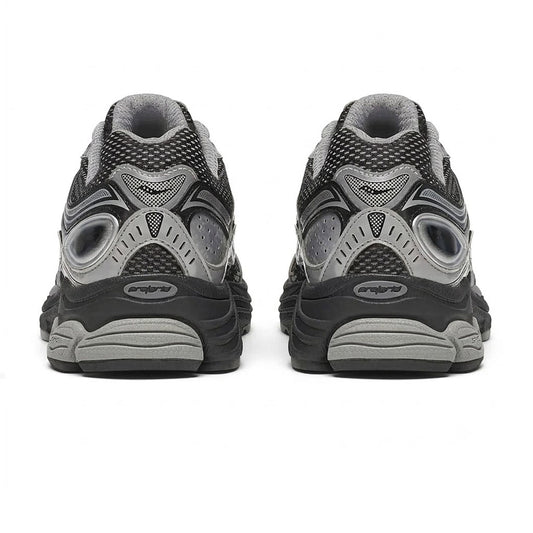
The ProGrid Omni 9 is perhaps the clearest example of the first group. Its layered construction, mesh, technical overlays and performance-derived proportions give it the retro-tech appearance that has become increasingly popular. The ProGrid Guide 7 explores a similar territory but with a slightly different expression of Saucony's technical archive, while the Ride Millennium leans heavily into the visual language of 2000s running footwear.
Then there are the Shadow 5000 and Shadow 6000, which offer a more recognisable heritage-running direction. Their proportions, layered materials and connection to Saucony's older running catalogue make them easier to understand as classic retro trainers rather than Y2K technical runners.
This distinction is useful because it means Saucony does not have one single lifestyle aesthetic. You can move from classic running heritage to technical archive to early-2000s running design without leaving the brand.
The ProGrid Omni 9 and Saucony's Retro-Tech Revival
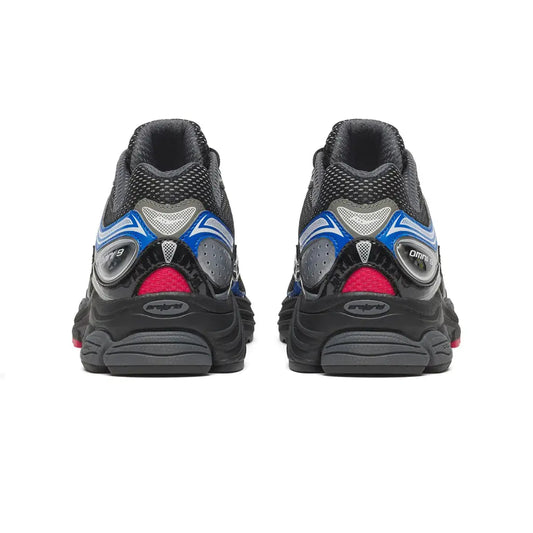
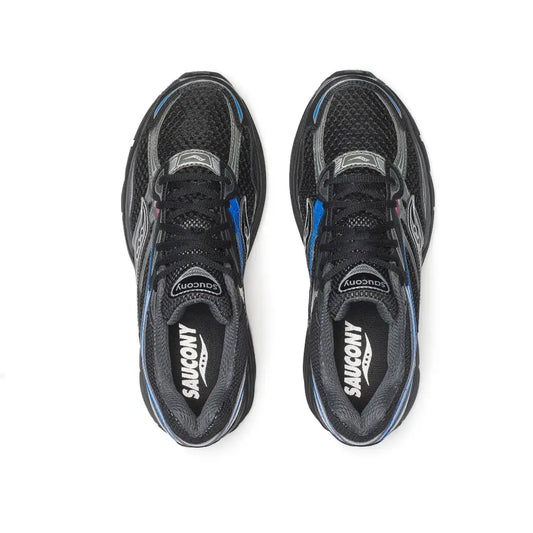
For anyone discovering Saucony through contemporary trainer culture, the Saucony ProGrid Omni 9 Silver Pink is an obvious place to start.
Its appeal comes from the way several elements of running footwear that once served purely functional purposes have become part of its visual identity.
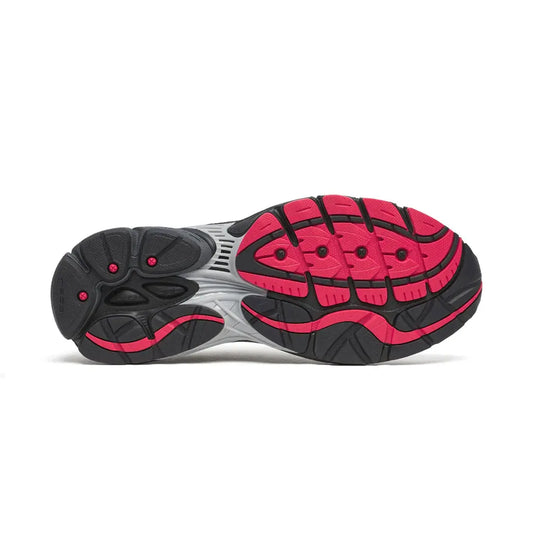
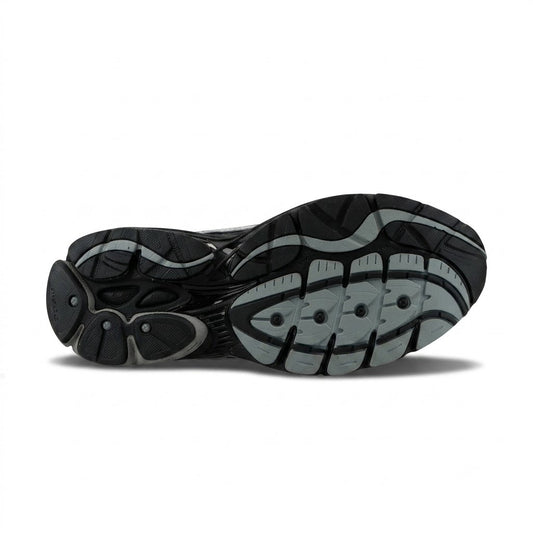
Open mesh, layered synthetic panels, metallic details and a more complex sole structure give the Omni 9 the kind of technical appearance associated with the retro-running revival. It looks as though it was designed for movement because, historically, that is exactly the language from which the design comes.
Different colourways can also change how that technical character reads, from brighter combinations to more understated options such as ProGrid Omni 9 Deep Navy.
That makes it particularly easy to wear with the clothes now surrounding the technical-runner trend: wide-leg trousers, cargos, washed denim, shorts and relaxed outerwear. The trainer already provides considerable texture, so the rest of the outfit does not need to compete with it.
The Omni 9 is therefore less about traditional heritage styling and more about retro-tech character. It can work for someone who already understands the appeal of ASICS or New Balance technical runners but wants something that feels less predictable.
ProGrid Guide 7 and Ride Millennium: Going Deeper Into the 2000s
The ProGrid Guide 7 occupies a related part of the Saucony archive, making it interesting for buyers who like technical running footwear but want to explore beyond the most recognisable silhouettes. Its mesh, overlays and performance-derived construction retain the visual vocabulary of running, but the result feels more like an archive discovery than a straightforward modern running shoe.
The Ride Millennium takes that idea further into the visual language of 2000s running. Its mesh-heavy construction, synthetic details and technical sole give it the kind of appearance that might once have been judged primarily through performance criteria but can now be appreciated as part of everyday style.
This is one of the reasons the current retro-running movement has been useful for brands such as Saucony. Details that were once simply functional — visible structure, layered uppers, metallic finishes and substantial soles — have become desirable in their own right. The technical elements are no longer something to hide. They are part of the aesthetic.
Shadow 5000 and Shadow 6000: The Heritage Side of Saucony
If ProGrid represents the more technical side of Saucony's lifestyle archive, the Shadow 5000 and Shadow 6000 offer a more traditional route into the brand.
The Shadow 5000 is particularly easy to understand as a classic retro-running trainer. Suede, mesh, layered construction and familiar running proportions give it a softer visual character than the more technical ProGrid models. The combination of trainer materials also gives the silhouette a more traditional heritage-running feel.
The Shadow 6000 develops that heritage language with a more substantial presence. Different materials, colour blocking, collaborations and releases can make the silhouette feel understated or much more expressive, which is part of its appeal to people who want to explore Saucony's archive beyond a single iconic model.
Together, the Shadow models demonstrate that Saucony's appeal does not depend entirely on the Y2K revival. There is a deeper running heritage underneath it, and that gives the brand another route into contemporary trainer culture.
The Grid 9000 and Saucony's Technical Archive
The Grid 9000 sits further towards the technical side of the archive. Its more structured appearance makes it relevant to buyers who already understand retro-running and want to explore some of the less obvious directions within Saucony's catalogue.
This is also where the term Grid becomes useful. Saucony's Grid technology belongs to the brand's performance history, but models associated with that period now have another cultural meaning. Their visible structures and technical details communicate not only performance heritage but also the visual language of a particular generation of running footwear.
That is an important distinction when looking at Saucony today. The brand's archive is not simply a collection of old trainers being brought back because they look vintage. The technology, construction and proportions that originally served runners are precisely what give many of these models their character now.
What About Modern Saucony Running Shoes?
The lifestyle side of Saucony's catalogue makes sense partly because the company never stopped developing performance footwear. Its modern running families continue the same relationship between movement, technology and footwear that shaped the archive in the first place.
The Ride is positioned around everyday running and versatility, making it one of the clearest examples of Saucony's modern daily-training approach. The Triumph moves towards a more substantial cushioned experience, while the Guide is built around stability and a different set of running requirements.
The Endorphin family represents the more speed-focused side of Saucony's performance range. Different Endorphin models serve different purposes, but the family as a whole demonstrates how far the company continues to push its modern running technology.
For a lifestyle customer, these models are useful context even if they are not the immediate shopping destination. They explain why the archive has credibility in the first place. Saucony's retro trainers are connected to a company that still develops footwear for serious running rather than a fashion label borrowing the appearance of performance.
Lifestyle Saucony or Performance Saucony?
The easiest way to navigate the range is to begin with the purpose of the trainer rather than its appearance.
If you want something primarily for everyday style, the ProGrid Omni 9, ProGrid Guide 7, Ride Millennium, Shadow 5000, Shadow 6000 and Grid 9000 are the more relevant directions. Within that group, the choice becomes a question of aesthetic: technical and Y2K, understated 2000s running, or classic heritage.
If you actually need a trainer for modern running, the conversation changes. Ride, Triumph, Guide and Endorphin belong to performance categories with different priorities, so they should be compared according to intended use rather than simply how they look.
There can obviously be crossover. Modern running footwear influences fashion, and archive running footwear can become part of everyday wardrobes. But remembering that these models were not necessarily created for the same purpose prevents some of the confusion around the Saucony range.
How Saucony Compares With ASICS and New Balance
Many people arrive at Saucony after becoming familiar with the wider retro-running movement through ASICS or New Balance.
That broader connection between running heritage and contemporary trainer culture is also worth considering when looking at how Saucony compares with ASICS and New Balance.
That makes comparisons useful, but looking for an exact equivalent can miss what makes Saucony different.
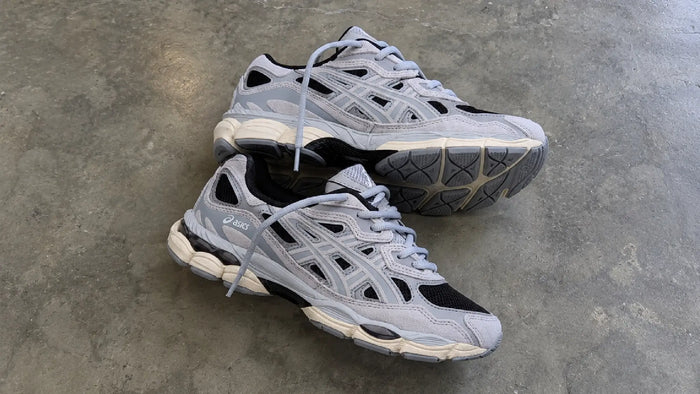
If you like the technical appearance of models such as the ASICS GEL-Kayano 14 or GT-2160, the ProGrid Omni 9, ProGrid Guide 7 and Ride Millennium offer a related visual language built around mesh, overlays, running-derived proportions and technical construction.
If your reference point is the New Balance 1906R or 2002R, the same three Saucony models can provide a comparable route into retro-tech styling, while the Shadow 5000 and Shadow 6000 make more sense if what you appreciate about New Balance is its traditional heritage-running side.
The point is not to find a Saucony version of another brand's trainer. It is to identify which part of the retro-running aesthetic you actually like. Saucony has its own archive, and that archive is what gives its models their particular character.
Which Saucony Makes Sense for Everyday Wear?
For a lifestyle buyer, three directions make the range relatively easy to understand.
For a lifestyle buyer, three directions make the range relatively easy to understand. If budget is also part of the decision, exploring best trainers under £200 can provide useful context before choosing between different models.
The ProGrid Omni 9 makes sense when the priority is a more pronounced technical or Y2K identity. Its layered construction gives an outfit plenty of visual interest and works particularly well with wider silhouettes and casual technical clothing.
The Ride Millennium is a natural choice if the appeal lies specifically in the appearance of 2000s running footwear. It has the mesh-heavy, performance-derived character associated with that period without relying on a traditional heritage silhouette.
The Shadow 5000 takes the opposite approach. Its classic running proportions and material combinations make it easier to integrate into everyday wardrobes where the trainer is intended to complement rather than dominate the outfit.
For someone wanting to explore further, the Shadow 6000 and Grid 9000 open up more of Saucony's archive and show how broad the brand's interpretation of retro running can be.
Finding the Right Saucony for Your Wardrobe
Once the purpose is clear, styling becomes relatively straightforward.
Technical models such as the ProGrid Omni 9 and Ride Millennium already contain a lot of visual information, so they tend to work well with wide-leg trousers, cargos, washed denim, shorts and relaxed outerwear. A colourway such as ProGrid Omni 9 OG White Brown can offer a more understated way into that technical aesthetic.
The Shadow family is more forgiving if you prefer classic casualwear. Straight denim, chinos, relaxed trousers, sweatpants and traditional outerwear all sit naturally alongside its heritage-running proportions.
This difference is useful because choosing a Saucony is not necessarily about finding the most distinctive model. Sometimes the better match is simply the one whose visual language already belongs in your wardrobe.
How Do Saucony Trainers Fit?
There is no single fit that applies to every Saucony model. Different families use different uppers, constructions and shapes, so the experience of wearing a Shadow can differ from wearing a ProGrid or a modern performance runner.
When changing between models, consider the amount of room you prefer through the toe box, how securely the heel sits, the flexibility of the upper and the overall volume of the shoe. Intended use also matters: the fit requirements of a running shoe are not necessarily the same as those of a lifestyle trainer.
For model-specific guidance, it is better to check sizing information for the exact silhouette rather than assuming that one Saucony size will feel identical across the entire range.
Why Saucony's Range Is Worth Understanding
The most interesting thing about Saucony is that its trainer families tell different parts of the same story. The Shadow models connect directly with the brand's heritage, Grid and ProGrid show how running technology became part of its visual identity, while Ride Millennium captures the renewed interest in 2000s performance design.
Modern Ride, Triumph, Guide and Endorphin models then show that the performance story is still moving forward.
That makes choosing a Saucony less about finding one definitive model and more about understanding where you want to enter the brand. It also raises a broader question when comparing different trainers: what makes a premium trainer truly premium?
You might arrive through the retro-tech appeal of the ProGrid Omni 9, the 2000s character of the Ride Millennium, the heritage of the Shadow 5000 or the deeper archive represented by the Shadow 6000 and Grid 9000.
The common thread is running. What changes is the way that history is expressed.
And that is ultimately what makes Saucony's range so interesting: the same performance heritage can produce a modern running shoe, a retro archive trainer or a contemporary lifestyle silhouette, depending on which chapter you choose to wear.