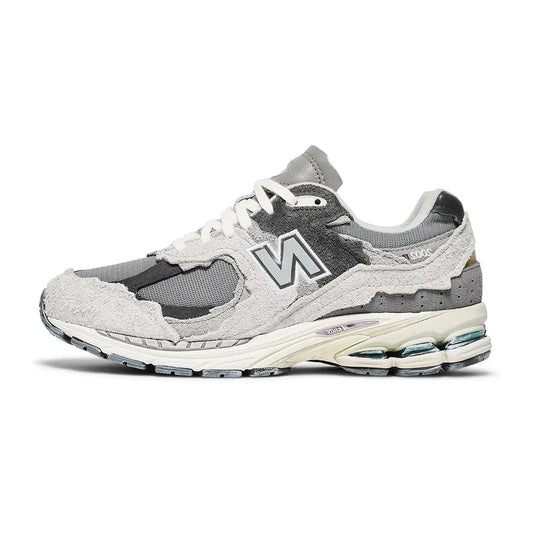
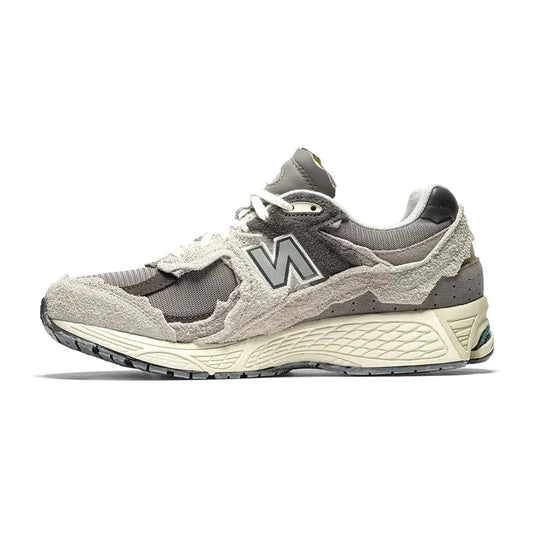
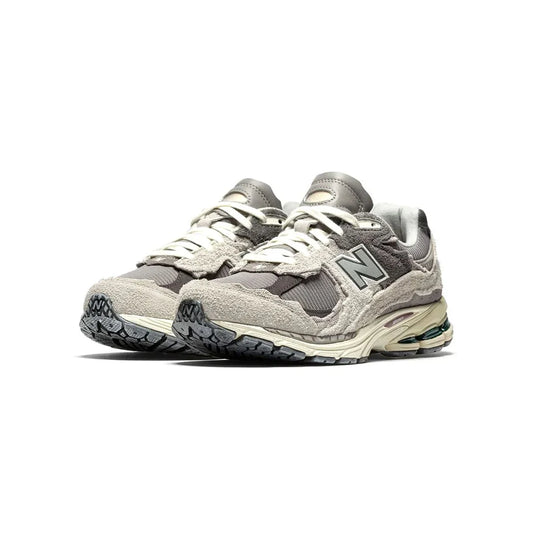
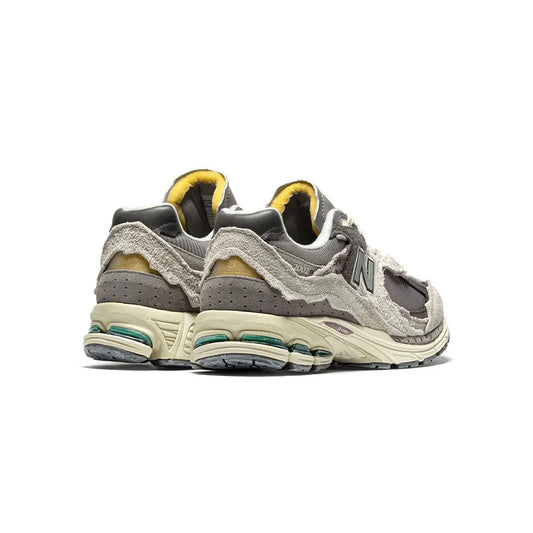
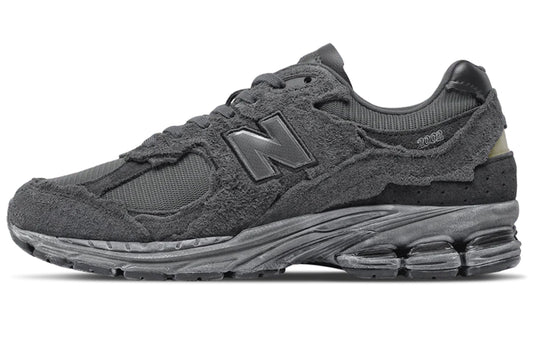
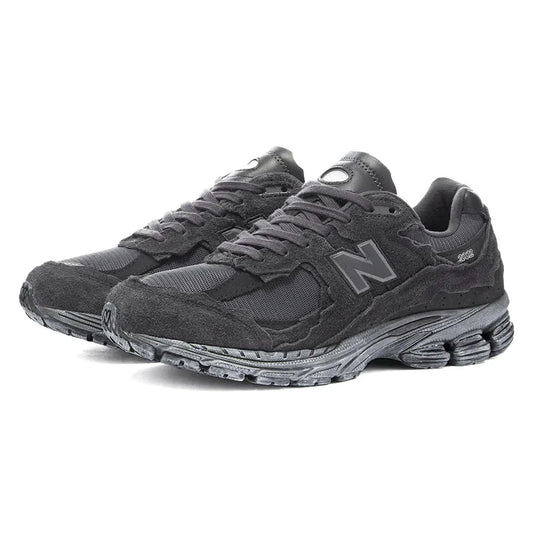
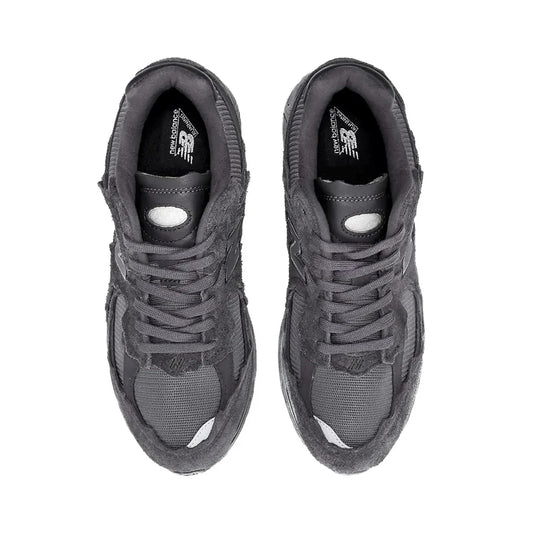
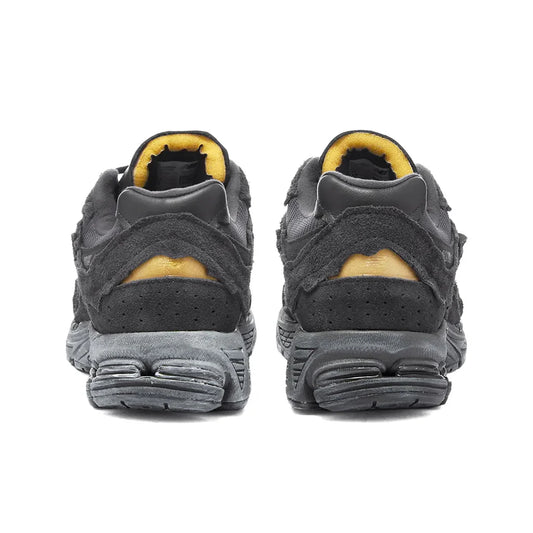
New Balance Sizing Guide: How Different Models Fit
Choosing the right New Balance size can be more complicated than expected.
Unlike brands where most models follow a relatively similar approach to fit, New Balance has developed a broad catalogue of trainers with different design philosophies, construction methods and intended uses.
The 990 Series, 550, 9060, 1906R, 991 and 992 all belong to the same brand, but they were not designed to create exactly the same experience on foot.
This is one of the reasons New Balance has developed such a loyal following. The brand offers everything from performance-inspired running trainers to basketball-influenced classics and modern lifestyle silhouettes, giving different wearers the opportunity to find a model that suits their feet and preferences.
It also means that choosing a New Balance size is not simply about knowing your usual number.
The best approach is to understand the model you are buying, how it was designed and how its construction interacts with your foot shape.
Does New Balance Fit True to Size?
There is no single sizing rule that applies perfectly across every New Balance model.
Many New Balance trainers fit true to size for most wearers, but the experience can vary depending on the silhouette, construction, materials and individual foot shape.
This is particularly important when moving between different New Balance families.
For example, a buyer who is comfortable in one running-inspired model should not automatically assume that another model will feel identical simply because the numerical size is the same.
Your usual New Balance size is therefore a useful starting point, but the specific model should always be considered before making a final decision.
Why New Balance Sizing Can Vary Between Models
New Balance has never followed a completely uniform approach to footwear design.
Throughout its history, the brand has developed trainers for running, walking, basketball, everyday wear and contemporary fashion. Each category has different requirements.
A performance running shoe may prioritise cushioning, stability and movement, while a lifestyle trainer may focus more heavily on structure, durability and everyday comfort.
These different objectives influence the way each model is constructed.
New Balance has also maintained individual product families for many years rather than forcing every silhouette into the same design formula. This is why models such as the 990 Series, 991 and 993 retain their own identities, while newer designs such as the 9060 and 1906R reinterpret elements of New Balance's running heritage for a modern audience.
The differences you feel between models are therefore often intentional rather than inconsistent.
Different New Balance Models Were Designed for Different Purposes
Understanding a model's history can make its fit easier to understand.
New Balance 990 Series
The 990 Series has its roots in premium running footwear, with a strong emphasis on stability, cushioning and long-distance comfort.
Its construction and proportions reflect that heritage, which has helped make the series popular both with runners and lifestyle wearers.
New Balance 991 and 992
The 991 and 992 continue the brand's performance-inspired heritage while developing their own construction, cushioning and aesthetic characteristics.
They have subsequently become important lifestyle and streetwear silhouettes in their own right.
New Balance 550
The 550 has a very different origin.
Its basketball-inspired construction creates a more structured sensation than many running-derived New Balance models. This is particularly noticeable for buyers who are moving into the 550 from softer or more performance-oriented trainers.
For shoppers considering the 550, you can check the current New Balance 550 White Grey availability, sizing and product details before buying online.
New Balance 9060
The 9060 takes inspiration from New Balance's running heritage while introducing a much more contemporary silhouette and modern midsole construction.
Its proportions and cushioning create a noticeably different wearing experience from more traditional New Balance models.
New Balance 1906R
The 1906R also draws heavily from the brand's performance-running archive while using a modern construction designed for contemporary everyday wear.
Understanding these differences is useful because it prevents buyers from assuming that every New Balance model should feel identical simply because the brand and numerical size remain the same.
Your Foot Shape Matters More Than the Number on the Box
Foot length is only one part of finding the right fit.
Width, instep height and overall foot volume can significantly affect how a trainer feels.
Two people with the same foot length may prefer completely different fits because their feet have different proportions.
Someone with a narrow foot may prefer a more secure fit, while someone with a wider forefoot may need additional room to remain comfortable throughout the day.
This is particularly relevant when comparing New Balance models because the brand has historically placed considerable emphasis on fit and comfort.
Before changing your size, consider whether the issue is actually length or width.
If your toes reach the front of the shoe comfortably but the forefoot feels restricted, simply choosing a longer size may not provide the solution you are looking for.
Width Is an Important Part of New Balance Sizing
One of the characteristics that makes New Balance particularly interesting from a sizing perspective is its long-standing attention to width.
New Balance offers different width options across parts of its range, although availability varies by model, market and release.
This means that choosing the right fit is not always about moving from one numerical size to another.
For buyers who regularly find standard-width trainers too narrow or too loose, checking whether the model is available in another width can be more useful than automatically sizing up or down.
When buying online, always check the width specification of the exact model and release you are considering.
What Do New Balance Widths Mean?
New Balance sizing is not only about shoe length. Width can also determine how comfortably a trainer fits around the forefoot and midfoot.
Depending on the model and market, New Balance offers different width options, allowing some wearers to choose a fit that better matches the shape and volume of their feet. This can be particularly useful if you regularly find standard-width trainers too narrow or too loose.
If the length of a New Balance trainer feels correct but the forefoot is uncomfortable, checking whether the model is available in another width may be more appropriate than simply moving up or down in size.
Width availability varies between models and releases, so always check the specific product information before assuming that another width is available. For online purchases, the width specification can be just as important as the numerical size.
Do Materials Affect How New Balance Trainers Fit?
They can.
New Balance uses a combination of materials including suede, mesh, leather and synthetic textiles.
New Balance uses a combination of materials including suede, mesh, leather and synthetic textiles.
Each material behaves differently.
Structured suede panels can initially feel firmer, while mesh tends to provide greater flexibility and breathability. Leather can gradually soften through regular wear, changing how the upper feels without changing the actual dimensions of the shoe.
This is one reason two New Balance models in the same numerical size can feel noticeably different.
The size itself has not necessarily changed.
The way the materials interact with your foot has.
When comparing sizing information online, therefore, pay attention to the exact model and construction rather than relying solely on reviews of another New Balance silhouette.
Why Online New Balance Sizing Advice Can Be Confusing
Search for New Balance sizing advice and you will often find conflicting recommendations.
One person may describe a model as true to size.
Another may recommend going up half a size.
Someone else may suggest staying with their usual size but choosing a different width.
These opinions can all be valid because sizing is influenced by individual preferences and foot shape.
Someone accustomed to narrow performance trainers may perceive the same New Balance model differently from someone who normally wears wider lifestyle trainers.
Instead of looking for one universal answer, consider why someone recommends a particular size and whether their foot shape and preferences are similar to yours.
That context is far more useful than simply counting how many reviews recommend sizing up.
How to Choose Your New Balance Size When Buying Online
Buying New Balance trainers online does not have to be a guessing game.
Understanding how to buy sneakers online can also help you evaluate sizing information, product details and the seller before placing an order.
Start with a model you already know.
If you own New Balance trainers that fit comfortably, use their size and construction as a reference point. Then consider how similar the new model is.
You should also:
-
Check the size chart for the specific model.
-
Measure both feet if you are unsure of your current size.
-
Use the larger foot as your reference.
-
Check the available width options.
-
Read reviews for the exact model rather than New Balance trainers generally.
-
Consider the materials used in the upper.
-
Think about how you intend to wear the trainers.
The more closely your reference matches the trainers you are buying, the more useful the comparison becomes.
How to Measure Your Feet for New Balance
If you are unsure about your size, measuring your feet can provide a more reliable starting point than relying on memory.
Measure both feet from the back of the heel to the longest toe and use the larger measurement when consulting the relevant size chart.
It can also be useful to measure your feet later in the day, when they may be slightly larger than they are first thing in the morning.
Remember that the measurement is only one part of the decision.
Width and foot volume can influence comfort just as significantly as length.
Should You Size Up or Down in New Balance?
There is no universal answer.
If your usual size fits comfortably in similar New Balance models, there may be little reason to change it.
Sizing up may provide additional length and room, but it can also create unwanted movement around the heel or excess space around the toes.
Sizing down can create a more secure fit, but should not be used to compensate for a model that simply feels different because of its construction.
Before changing size, identify the actual problem.
Is the trainer too short?
Too narrow?
Too loose around the heel?
Too restrictive around the instep?
The answer can help determine whether changing size is appropriate or whether another model or width would be a better solution.
New Balance Running Trainers vs Lifestyle Models
One of the easiest ways to misunderstand New Balance sizing is to compare models that were designed for completely different purposes.
Running trainers are developed around movement, cushioning, stability and performance.
Lifestyle models may place greater emphasis on structure, materials, aesthetics and everyday wear.
This difference can influence how the same numerical size feels.
A buyer who normally wears performance running trainers may initially find a lifestyle silhouette more structured, while someone accustomed to traditional lifestyle trainers may find a running-inspired model more accommodating.
Neither experience means the sizing is necessarily incorrect.
It reflects the design purpose of the sneaker.
Comfort Should Be the Final Test
Sizing guides can provide useful information, but your own comfort remains the most important factor.
A well-fitting New Balance trainer should feel secure without creating painful pressure.
Your toes should have enough room to move naturally, while the heel should remain reasonably secure during walking.
The upper should not create persistent pressure across the forefoot or instep.
When trying on a pair, check a few simple points:
-
Your toes can move naturally without pressing against the front.
-
Your heel remains reasonably secure when walking.
-
The forefoot does not feel compressed or excessively loose.
-
The upper does not create uncomfortable pressure across the instep.
-
Your foot feels supported without being tightly restricted.
A trainer can feel different from what you are used to without being the wrong size. The important question is whether that difference remains comfortable when you stand, walk and move naturally.
If a pair feels slightly unfamiliar because its construction differs from your usual trainers, that does not necessarily mean you need another size.
The goal is not to find the loosest or tightest possible fit.
It is to find the balance that allows you to wear the trainers comfortably for their intended purpose.
Your Existing New Balance Trainers Are Your Best Reference
If you already own several New Balance models, your own experience can be more valuable than generic online sizing advice.
Take note of:
Which size feels best?
Which models feel wider or narrower?
Do you prefer more room around the toes?
Do you need additional width rather than additional length?
Which materials feel most comfortable?
Over time, these observations create a personal sizing reference that makes future purchases considerably easier.
Instead of memorising isolated recommendations for every model, you begin to understand how different New Balance silhouettes work with your feet.
Choosing the Right New Balance Model Is Part of Choosing the Right Fit
Finding the right New Balance is not simply about selecting a number.
The model itself can have just as much influence on your experience.
A 990, 550, 9060 and 1906R may all carry the New Balance name, but their different histories and construction philosophies create distinct experiences on foot.
That variety is one of the reasons the brand has remained so influential across running, lifestyle and contemporary streetwear.
Understanding the model before buying it gives you a much stronger starting point for choosing the right size.
New Balance Sizing: The Bottom Line
For most buyers, their usual New Balance size is the best starting point.
But the ideal fit depends on more than the number printed inside the trainer.
Consider:
-
The specific New Balance model
-
Your foot length
-
Your foot width
-
Your overall foot volume
-
Available width options
-
The materials used
-
Your preferred fit
-
How you intend to wear the trainers
Most importantly, do not assume that every New Balance model should feel identical.
The differences between the brand's silhouettes are often the result of intentional design decisions rather than inconsistent sizing.
Once you understand those differences, buying New Balance trainers online becomes much more straightforward.
You are no longer simply asking "What size am I?"
You are asking the more useful question:
"Which New Balance model, width and size are best suited to my feet?"
That is the approach that makes sizing more predictable and helps you choose a pair you will genuinely enjoy wearing.
Frequently Asked Questions
Does New Balance run true to size?
Many New Balance trainers fit true to size for most people, but sizing can vary between models. Your usual New Balance size is a useful starting point, but the specific silhouette, width and construction should also be considered.
Are New Balance 990s true to size?
The 990 Series generally provides a consistent starting point for buyers using their usual New Balance size, but individual fit can vary according to foot shape and width preference.
Do New Balance 550s fit differently?
The 550 has a basketball-inspired construction that can feel more structured than running-derived New Balance models. Buyers should consider the specific fit rather than assuming every New Balance silhouette feels identical.
Are New Balance 9060s true to size?
Your usual New Balance size is generally a sensible starting point for the 9060. However, personal foot shape and preferred fit can influence whether you prefer more or less room.
Do New Balance 1906R fit true to size?
The 1906R's running-inspired construction gives it a different feel from more traditional lifestyle models. Start with your usual New Balance size and consider the specific fit of the model before changing size.
Does New Balance offer different widths?
New Balance offers multiple width options across parts of its range, although availability varies by model and market. If you regularly experience problems with width, checking the available width options can be more useful than simply sizing up.
Should I size up in New Balance?
Not automatically. Your usual New Balance size is generally the best starting point. If you experience discomfort, identify whether the issue is length, width or overall foot volume before deciding whether to change size.
How should New Balance trainers fit?
Your toes should have enough room to move naturally, your heel should remain reasonably secure and the upper should not create persistent pressure across the foot. The ideal fit should feel comfortable without excessive movement.
How do I measure my feet for New Balance?
Measure both feet from the back of the heel to the longest toe and use the larger measurement when checking the relevant New Balance size chart. Width and foot volume should also be considered.