Jordan 4 Black Cat: Complete Guide to the Iconic Black Jordan 4
The Air Jordan 4 Black Cat is one of those sneakers that looks simple until you start looking closely. At first glance, there appears to be very little to explain: a Jordan 4 covered almost entirely in black, without a bright colour blocking scheme or obvious graphic details competing for attention. But that simplicity is precisely what has made the Black Cat so distinctive. Its all-black construction, dark nubuck and understated appearance have turned one of Jordan Brand's most recognisable basketball silhouettes into a particularly versatile lifestyle sneaker, while its connection to Michael Jordan's "Black Cat" nickname has given the model an identity that extends beyond its appearance.
That also makes buying a Jordan 4 Black Cat different from simply choosing a black Jordan 4. The version, release, condition, materials and authenticity of the pair can all affect what you are actually buying and whether the price makes sense. This becomes particularly important when looking at older pairs or buying through the secondary market, where photographs and descriptions do not always tell the whole story.
For that reason, the most useful way to approach a Black Cat purchase is not to begin with the question of how much the sneaker is worth. It is to begin with a more fundamental question: is the pair actually authentic, and exactly which Black Cat are you buying?
Why is the Jordan 4 Black Cat so popular?
Part of the Black Cat's appeal comes from how successfully it removes almost everything that usually makes a sneaker visually complicated.
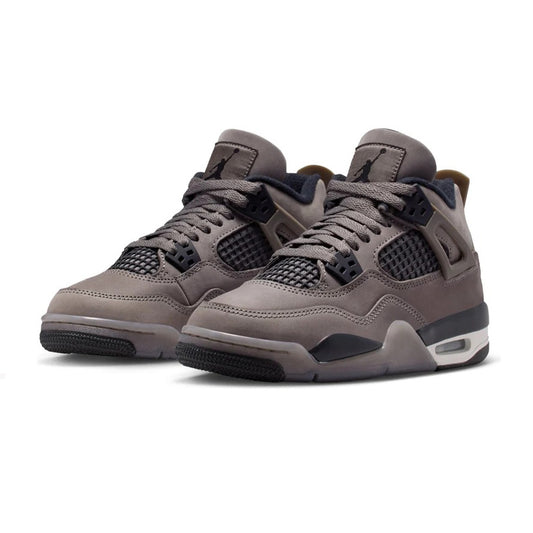
The Jordan 4 already has a highly recognisable structure. Its mesh panels, wing-like side supports, visible Air unit and distinctive outsole give the silhouette an identity that does not depend on colour. The Black Cat takes that structure and places almost all of it into a monochromatic palette. Instead of using contrasting panels to create the visual effect, the sneaker relies on shape, texture and material.
That gives the Black Cat an unusual position within the Jordan 4 family. It can be worn with streetwear without requiring the outfit to be built around the sneaker, but it can also retain enough presence to feel like a statement piece. The all-black finish works with jeans, cargos, wider trousers and other everyday clothing particularly easily, which helps explain why the model has remained relevant beyond its original basketball context.
The name adds another layer. Michael Jordan was famously associated with the "Black Cat" nickname, a reference to the qualities of stealth, agility and competitiveness associated with his playing style. The sneaker therefore has a connection to Jordan's identity that feels particularly appropriate for a model whose entire visual concept is built around black.
Its appeal is ultimately a combination of silhouette, symbolism and simplicity. The design does not need bright colours to be recognisable.
The Black Cat is more than a black Jordan 4
It is tempting to treat the Black Cat as a colourway rather than a distinct sneaker, particularly because other Jordan 4 models can also appear in predominantly black constructions. But that misses an important part of the model's appeal.
The Black Cat's identity comes from the way its materials and colour work together. The nubuck construction creates a softer, more muted appearance than a glossy or heavily contrasted sneaker, while the monochromatic treatment allows the different surfaces of the Jordan 4 to become more visible.
That becomes especially noticeable as the sneaker ages. Black nubuck can show changes in texture, fading, creasing and wear more clearly than someone buying a brand-new pair might expect. A pair that looks almost uniform in official product photography can develop a very different appearance after years of use.
This is one reason condition matters so much when buying an older Black Cat. The black colour may make the sneaker look relatively simple, but it does not make wear invisible. In some cases, the material itself becomes one of the most important clues to how a pair has been treated.
Which Jordan 4 Black Cat are you buying?
Before discussing price, it is important to establish exactly which release you are looking at.
The Black Cat has appeared in different periods of Jordan Brand's history, and buyers should not automatically assume that every pair described as a "Jordan 4 Black Cat" is identical. Release year, construction, materials, sizing information and the condition of the individual pair can all be relevant.
This matters particularly in the secondary market. A seller may use the familiar Black Cat name without giving enough information about the specific release. If you are comparing two pairs at very different prices, the difference may not simply be a seller asking more money. The pairs could differ in release, condition, completeness or provenance.
A sensible buyer should therefore establish the exact model and release before comparing prices. Product photographs, the style or product code, box information and other identifying details can help establish what the seller is actually offering.
The principle is simple: do not compare prices until you know that you are comparing the same thing.
Why authenticity should come before price
The all-black design creates an unusual challenge for buyers. There are fewer obvious colour details to inspect, and a convincing counterfeit can sometimes appear surprisingly close to the genuine sneaker in photographs.
Authenticity should therefore come before questions about whether a particular price is a good deal.
A genuine Jordan 4 has a combination of construction details, materials, proportions, branding and finishing that should work together. No single visual feature should be treated as an absolute authentication test. Instead, buyers should look at the sneaker as a whole and compare multiple details against reliable references.
The shape of the upper, the quality and behaviour of the nubuck, the placement and construction of branding, the tongue, heel, cage details, stitching and outsole should all make sense together. Packaging and labels can provide additional information, but they should not be treated as definitive proof by themselves.
This is particularly important when buying used. A heavily worn authentic Black Cat can look less impressive than a convincing replica in a photograph, while aggressive cleaning or poor lighting can change how the materials appear. Conversely, a seller may use photographs that hide important areas of the shoe.
Authenticity is not simply another part of a buying guide. It is the condition that makes every other part of the purchase meaningful. There is little value in determining whether a price is attractive if the sneaker itself is not genuine.
How condition changes the value of a Black Cat
Once authenticity and release have been established, condition becomes one of the most important variables.
A new pair and a heavily worn pair can represent completely different purchases even if they share the same model and size. With a Black Cat, particular attention should be paid to the nubuck, outsole, midsole, heel and areas that commonly show creasing or abrasion.
The nubuck deserves special attention because its texture contributes significantly to the sneaker's appearance. Uneven fading, flattened areas, stains or excessive brushing can change the way the black finish looks. The outsole can also reveal how frequently the pair has been worn, while the midsole may show discolouration or ageing depending on how the sneaker has been stored.
A buyer should therefore look beyond the seller's description of "good condition" or "lightly worn". Those terms are subjective. Detailed photographs are much more useful because they allow the buyer to assess the actual state of the pair.
Accessories can matter too. Original boxes, spare laces or other accompanying items may add completeness to a purchase, particularly for collectors, but they should never distract from the condition and authenticity of the shoes themselves.
Do Jordan 4 Black Cats fit true to size?
Sizing is another important part of the buying decision, particularly because Jordan 4s have a characteristic fit that may not feel identical to every wearer.
The Jordan 4 has a structured upper and a relatively substantial construction, so the way it feels on foot can differ from a lightweight running-inspired sneaker. Buyers who already know their Jordan 4 size have an advantage, while anyone purchasing their first pair should consider both their usual size and how they prefer their sneakers to fit.
Foot shape can also influence the experience. Someone with wider feet may perceive the fit differently from someone with a narrower foot, and the materials and construction of an older or heavily worn pair can also affect how it feels.
This is one reason buying a Black Cat solely because a seller has described it as a particular size is not enough. When purchasing second-hand, it is worth confirming the labelled size and, where possible, comparing it with a Jordan 4 you already own.
Sizing should therefore be treated as part of the overall buying decision rather than an isolated specification.
What should you pay for a Jordan 4 Black Cat?
There is no single price that makes a Black Cat automatically good value.
The amount a buyer should consider paying depends on the specific release, condition, size, completeness, authenticity and current market demand. A pair offered substantially below the prices of comparable examples may look like an opportunity, but an unusually low price can also be a reason to investigate the listing more carefully.
This is where understanding the secondary market becomes useful even if you are not a reseller.
You do not need to be buying the sneaker as an investment to care about its market value. Knowing what comparable pairs are selling for can help you recognise whether an asking price is reasonable, whether the condition justifies a premium and whether a supposedly rare pair is actually being presented accurately.
The important distinction is between market information and resale speculation. The purpose of researching the market is not necessarily to predict whether the Black Cat will increase in value. It is to understand what you are being asked to pay.
For an ordinary buyer, this makes price less of an emotional number and more something that can be evaluated against the actual pair.
Is the Jordan 4 Black Cat worth buying?
For someone attracted to the Jordan 4 silhouette but looking for something more understated, the Black Cat remains an unusually versatile option.
Its all-black construction makes it easier to style than many of the more colourful Jordan 4s, while the underlying shape still gives it the presence associated with the model. It can work as an everyday sneaker, a streetwear piece or a collector's pair without having to change its identity.
The more important question is whether the individual pair you are considering is worth buying.
A genuine pair in good condition, from a known release and at a sensible market price can make a strong purchase. A heavily worn pair with uncertain provenance and a price that only makes sense if every claim from the seller is true is a very different proposition.
The Black Cat may look like one of the easiest Jordan 4s to understand, but its apparent simplicity makes the details more important.
How to buy a Jordan 4 Black Cat more safely
The safest approach is to treat the purchase as a sequence rather than jumping straight to the price.
Start by identifying the exact Black Cat release and verifying that the pair corresponds with it. Examine the construction and materials rather than relying on one supposed authentication feature, then check the condition carefully, especially the nubuck, outsole and midsole. Confirm the labelled size and consider how the Jordan 4 normally fits you before comparing the asking price with other genuine examples in a similar condition.
This process is useful whether you are buying from a retailer, a resale platform or an individual seller. The more uncertain the source, the more important it becomes to gather evidence before committing money.
It also changes the way a buyer thinks about a bargain. A low price is only attractive when the underlying product has been properly established. A cheap Black Cat is not necessarily a good deal; a genuine Black Cat at a price that makes sense for its release and condition is.
Why the Black Cat remains an important Jordan 4
The Jordan 4 Black Cat has become important precisely because it does not rely on complexity.
The silhouette provides the recognition, the all-black colourway gives it versatility, and the nubuck construction gives the sneaker enough material character to remain interesting without introducing a traditional colour-blocking scheme. Its connection to Michael Jordan adds cultural context, while scarcity and demand have helped establish its relevance among collectors and buyers.
But those same qualities make buying one more nuanced than simply searching for the lowest price.
The Black Cat's story is ultimately a contradiction. The design looks simple because everything has been reduced to black, yet that simplicity makes the material, release, condition, authenticity and provenance more important, not less.
For anyone considering buying a Jordan 4 Black Cat in the UK, that is the most useful way to approach the sneaker. You do not need to be a reseller or a serious collector to care about its market value, release history or authenticity. You simply need to know what you are buying before you decide what it is worth to you.
The best purchase is therefore not necessarily the newest pair, the rarest pair or the cheapest pair. It is the pair whose authenticity, version, condition, fit and price all make sense together.
That is what turns the Black Cat from a desirable black Jordan 4 into a purchase you can understand with confidence.