How to Choose the Right Saucony Trainers
So, you've decided you want a pair of Saucony trainers. Now comes the harder question: which Saucony should you actually buy?
The answer depends less on finding the universally “best” Saucony and more on understanding what you want from the pair. You might want a retro-tech trainer to wear with denim and wide-leg trousers, an alternative to ASICS or New Balance, or an everyday pair for walking, commuting and travelling. You might also be looking for a genuine performance trainer for running. Those are completely different buying decisions.
Saucony's range stretches across modern running, archive performance, retro-running and lifestyle footwear, so choosing the right pair starts with understanding which part of the brand makes sense for you. The most technical, expensive or talked-about model isn't automatically the right choice. The better question is whether the trainer fits the way you'll actually wear it.
Saucony Buying Guide: Start Here
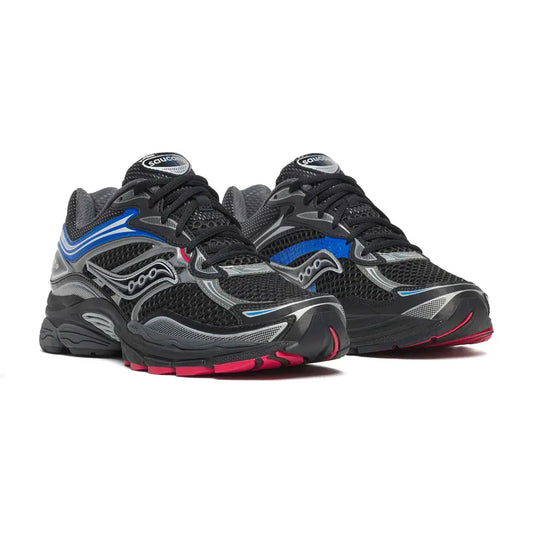
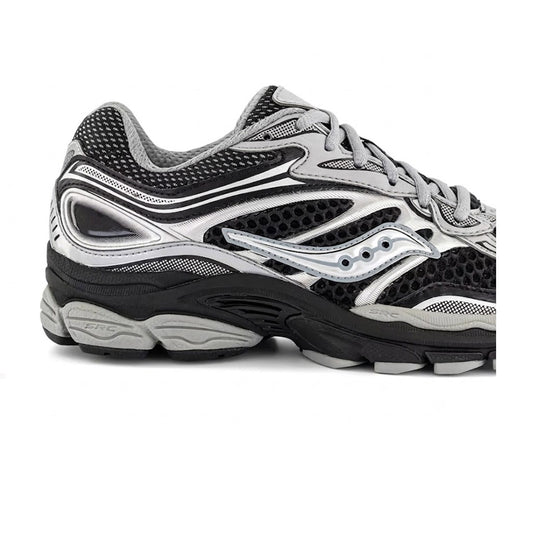
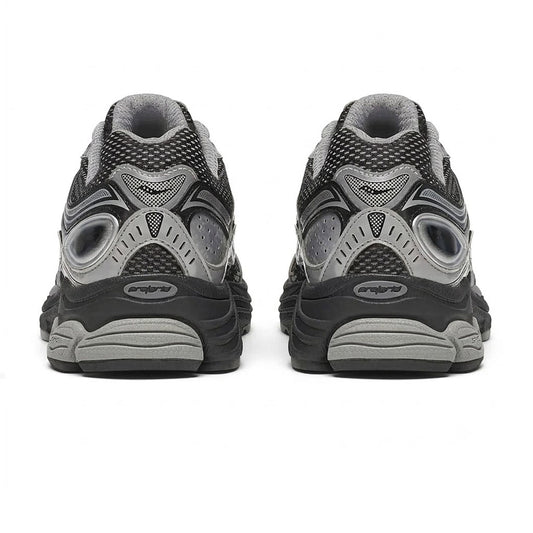
If you want the quickest way to narrow down the range, start with what you expect from the trainer rather than the model name. A standout retro-tech look points you towards the ProGrid Omni 9, while the Ride Millennium offers a strong Y2K running aesthetic without feeling quite as obvious. For a more traditional archive-inspired silhouette, the Shadow 5000 and Shadow 6000 are natural places to start.
If you're buying primarily for running, the decision changes. Saucony's performance families, including Ride, Triumph, Guide and Endorphin, are designed around different types of running and different priorities. That distinction is useful because it immediately removes a lot of unsuitable options.
For most lifestyle buyers, the question isn't which Saucony has the longest list of technologies. It's which silhouette, fit and construction make the most sense for your everyday rotation.
1. Start With How You'll Actually Wear Them
Before looking at colourways, technologies or prices, think about what the trainer will actually do once it leaves the box. If you're buying for everyday lifestyle wear, style, comfort, versatility, materials and how naturally the pair works with your existing wardrobe are likely to matter most.
This is where models such as the ProGrid Omni 9, Ride Millennium and Shadow families become particularly interesting. Their running-inspired construction gives them a strong connection to performance footwear, but they can also work as part of an everyday wardrobe rather than looking like trainers chosen specifically for training.
If you're buying for walking, commuting or travel, comfort becomes more important the longer you're on your feet. Long walking days, hard pavements, train stations and airports can reveal differences that aren't obvious when you try a trainer on for five minutes. Fit, stability, weight, breathability and the overall underfoot feel can matter just as much as appearance.
Running is a different decision altogether. If performance is the primary purpose, distance, training style, cushioning, stability and individual fit should take priority over lifestyle aesthetics. A running-derived design doesn't automatically make an archive or lifestyle trainer suitable for current training.
Then there is the most common situation: you want one pair that can do a bit of everything. For commuting, weekends, travel, walking and everyday outfits, versatility is often more valuable than specialisation. The best choice may simply be the trainer that gives you the fewest reasons to leave it at home.
2. Decide Which Saucony Aesthetic You Actually Like
Saucony doesn't have one single visual identity, and that is part of what makes the brand interesting. Its archive covers several different interpretations of running footwear, from traditional retro silhouettes to the layered, technical look associated with late-1990s and early-2000s runners.
If you're drawn to the retro-tech or Y2K aesthetic, look for mesh uppers, metallic or synthetic overlays, complex panelling and technical-looking soles. The ProGrid Omni 9, ProGrid Guide 7 and Ride Millennium sit naturally within this direction. They make sense if you already like the visual language of technical ASICS or New Balance runners but want something less familiar.
Heritage running has a different character. Models such as the Shadow 5000 and Shadow 6000 lean more heavily into classic running proportions, suede and mesh combinations, layered uppers and Saucony's archive identity. They can work particularly well with denim, casualwear and more understated everyday styling.
Then there is modern performance footwear. Here, the visual appeal becomes secondary to what you need the shoe to do. Ride, Triumph, Guide and Endorphin belong to a more technical part of Saucony's range, so intended use should lead the decision rather than the colourway alone.
3. ProGrid Omni 9, Ride Millennium or Shadow?
For many lifestyle buyers, this is a more useful comparison than looking across the entire Saucony catalogue.
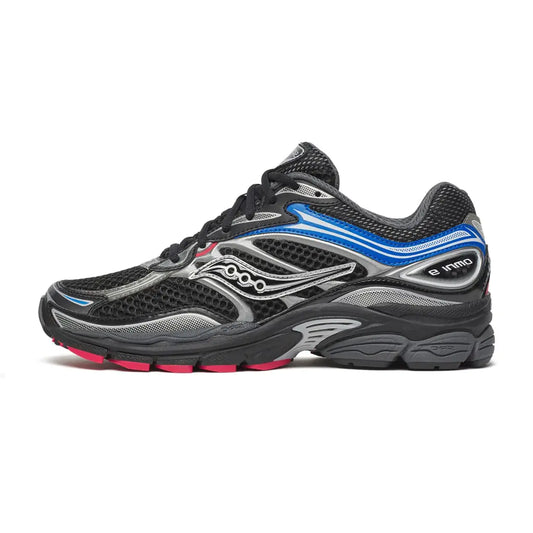
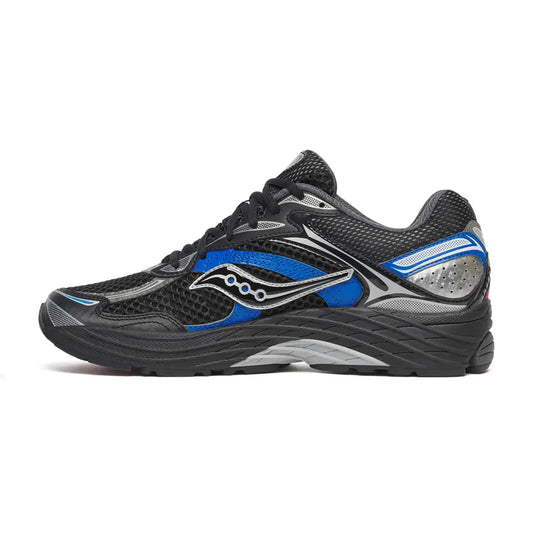
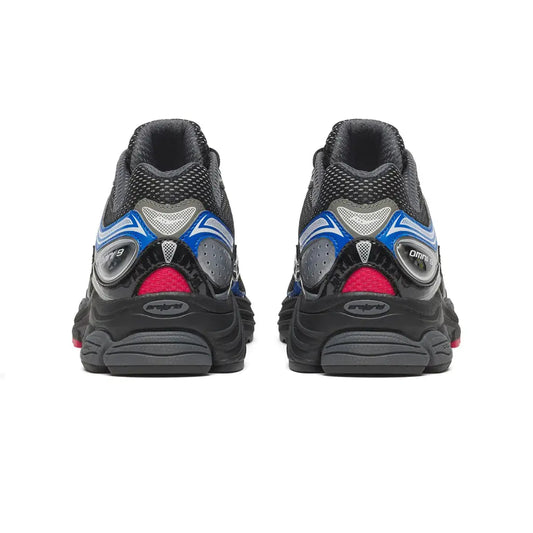
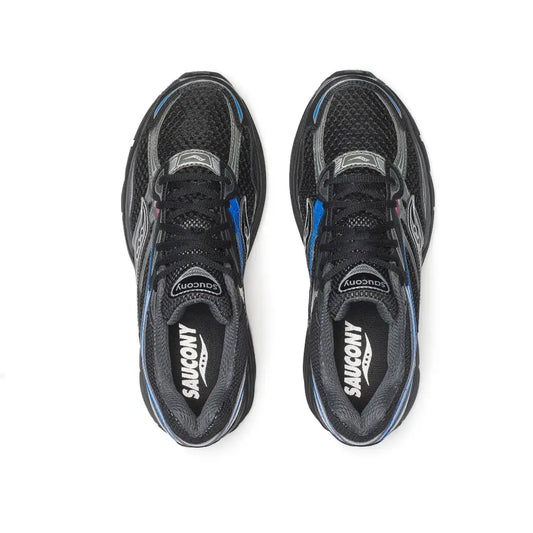
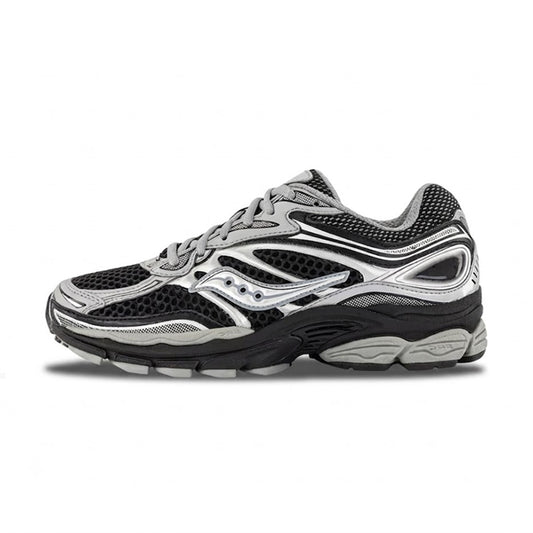
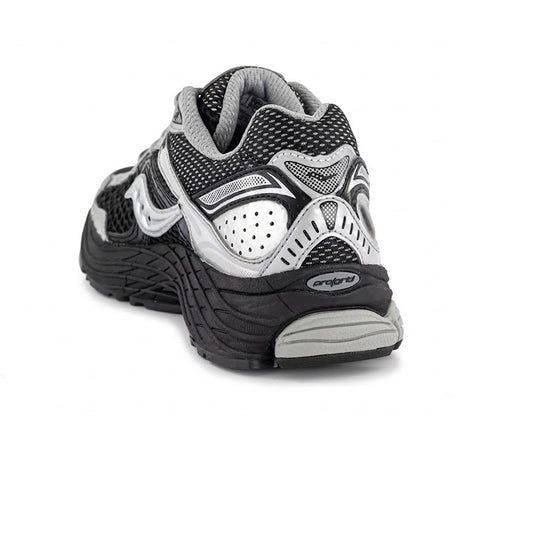
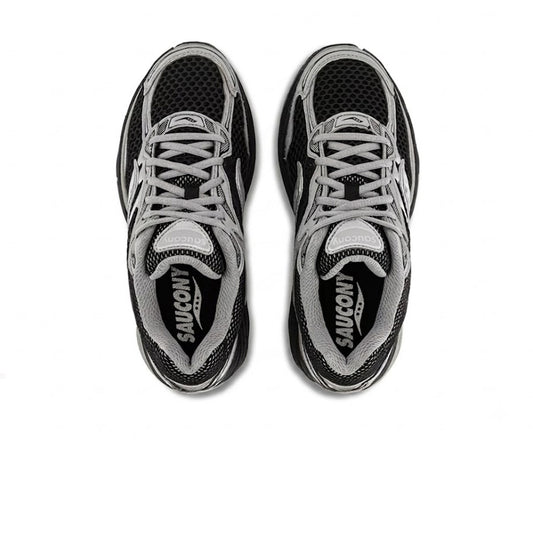
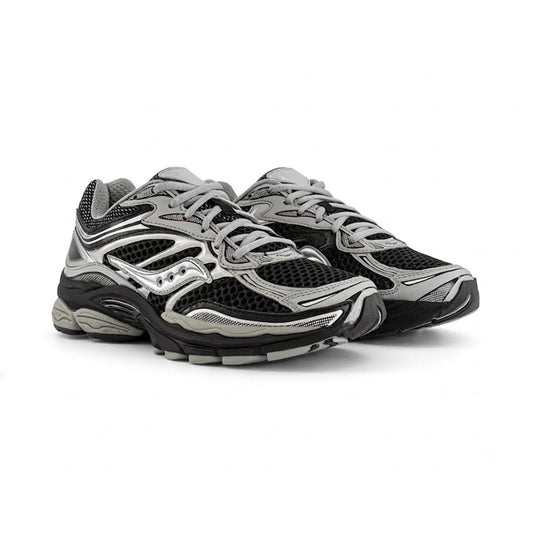
Choose the ProGrid Omni 9 if you want the strongest retro-tech statement. Its layered construction, mesh, technical detailing and running-derived proportions give it a distinctly Y2K character. It works particularly well with wide-leg trousers, cargos, washed denim, technical pieces and relaxed streetwear because the trainer already brings plenty of visual texture to the outfit.
The Ride Millennium takes a slightly different route. It leans heavily into the 2000s running aesthetic and gives you the kind of technical, layered appearance associated with retro runners without simply repeating the most familiar silhouettes from other brands. It is a useful option if you want the look but prefer something that feels a little less predictable.
The Shadow 5000 and Shadow 6000 are better suited to someone who prefers a more traditional retro-running silhouette. Their proportions and material combinations feel closer to classic archive running footwear, making them particularly easy to work into wardrobes built around denim, casualwear, heritage pieces and simpler styling.
The question isn't which of these is objectively better. It's which version of Saucony fits the clothes you already wear and the role you want the trainer to play.
4. If You Like ASICS, Which Saucony Should You Try?
Saucony can be particularly interesting if you already wear technical ASICS trainers and want something different without abandoning the wider retro-running aesthetic.
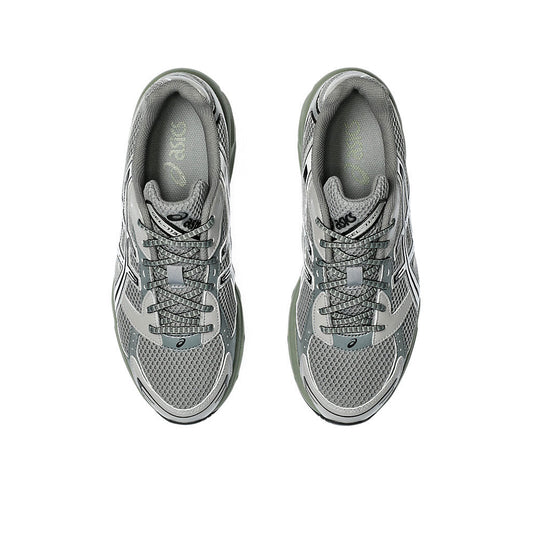
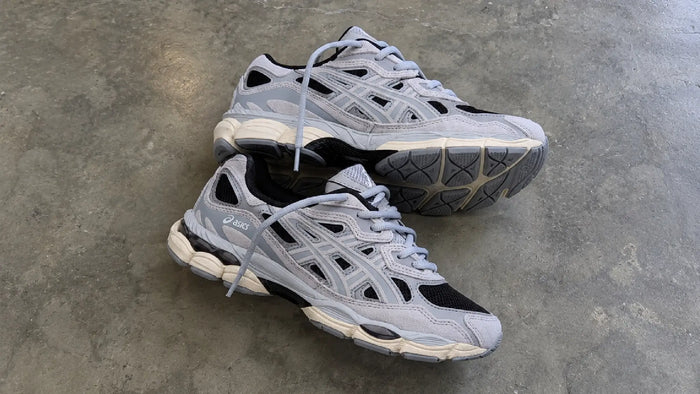
If you like models such as the ASICS GEL-Kayano 14 or GT-2160, start by exploring the ProGrid Omni 9, ProGrid Guide 7 and Ride Millennium. These aren't direct technical equivalents, and they shouldn't be treated as one-for-one alternatives. The connection is more visual: mesh, layered uppers, performance-derived construction and the proportions associated with earlier generations of running footwear.
That makes Saucony a useful way to explore the same broader movement without simply buying another version of a trainer you already know. You can keep the technical retro character while bringing a different archive, silhouette and brand history into your rotation.
5. If You Like New Balance, Which Saucony Should You Try?
The same principle applies if New Balance is your usual reference point, although the right Saucony depends on what you actually like about your New Balance trainers.
If you are drawn to the technical aesthetic of models such as the 1906R or 2002R, the ProGrid Omni 9 and Ride Millennium are natural places to explore. Their layered construction and running-derived proportions occupy a similar wider visual space.
If you prefer a more traditional retro-running look, the Shadow 5000 and Shadow 6000 make more sense. Instead of looking for an exact Saucony equivalent to your favourite New Balance, think about what you are responding to in the first place. Is it the mesh, the suede, the comfort, the technical construction, the proportions or simply the way the trainer works with your wardrobe?
Once you understand that, choosing a Saucony becomes much easier.
6. Think About the Role the Trainer Will Play in Your Rotation
Some trainers quietly support an outfit. Others become its focal point. Saucony can do both, and colourway plays a major role in deciding which direction a pair takes.
A silver or heavily layered ProGrid can add texture and technical detail to an otherwise simple outfit, while a neutral Shadow can sit much more quietly alongside denim or casualwear. If your wardrobe already contains bold patterns, bright colours or statement outerwear, a restrained colourway may give you more flexibility.
The opposite can also be true. If most of your wardrobe is built around black, grey, navy, cream, white and denim, a metallic or more expressive Saucony can become the element that gives the outfit some character.
The useful question isn't whether a particular colourway is popular. It's whether you can already picture yourself wearing it several different ways.
7. Pay Attention to Materials
Materials affect much more than appearance. Saucony lifestyle trainers can combine mesh, suede, leather, synthetic overlays, rubber and technical textiles, and those choices influence the texture, structure, breathability, maintenance and way a trainer ages.
A mesh-heavy technical runner can feel visually complex and performance-led, while a suede-heavy Shadow can have a softer, more heritage-inspired character. Neither construction is automatically more premium. What matters is whether the materials suit the design and the way you intend to use the trainer.
Understanding what makes a trainer feel premium is also useful when you're deciding how much to spend. Our guide to how to choose premium trainers without overspending explores why materials, construction, design and long-term value can matter more than simply paying more for a name.
This becomes particularly relevant if the pair is going to be part of your regular UK rotation. A trainer that looks great in a product photograph still needs to work with real weather, everyday surfaces and the amount of maintenance you're realistically prepared to give it.
8. Comfort Is More Than Cushioning
One of the easiest mistakes when buying trainers is assuming that softer automatically means more comfortable. In reality, comfort is a combination of several things, and the balance that works for one person may feel completely different to someone else.
Cushioning matters, but so do fit, heel security, toe-box space, upper flexibility, weight, breathability and stability. A soft midsole might feel impressive immediately, but that doesn't mean every wearer will prefer it after several hours of walking or commuting.
Think about comfort as the way the complete trainer works with your foot and your intended use. If you're buying a lifestyle trainer for everyday wear, the best underfoot feel may not be the same one you'd choose for a dedicated running shoe.
9. Don't Assume Every Saucony Fits the Same
The Saucony name doesn't guarantee identical fit across every model. A ProGrid Omni 9, Shadow, Ride Millennium and modern performance trainer can use different shapes, materials and constructions, which can affect toe-box space, heel security, upper flexibility and overall internal volume.
Your usual Saucony size is useful information, but it isn't an absolute rule. Before buying, check model-specific sizing information and think about whether you normally prefer a closer performance fit or a little more room for everyday wear.
This is one of those decisions where five minutes of research can be more useful than simply ordering your usual size and hoping for the best. If you're unsure, use OG Kicks' Saucony Sizing & Fit Guide to look more closely at the specific model before buying.
10. Think About Where You'll Actually Wear Them
A trainer still has to exist outside the product photograph. For a UK buyer, that can mean wet pavements, rain, public transport, hard urban surfaces, parks and long walking days.
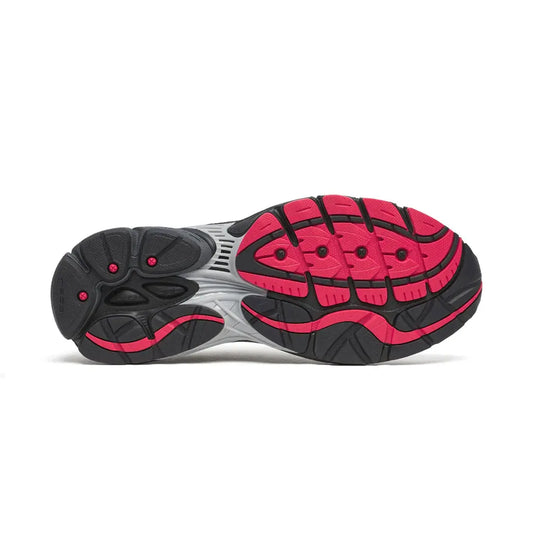
If you intend to wear a pair frequently, think about the combination of outsole, traction, materials, maintenance and colourway rather than judging the upper in isolation. You don't necessarily need a trail trainer to walk around London, but you may appreciate a construction that feels more practical when the weather changes.
The same principle applies to travel. A trainer that looks good but becomes uncomfortable after a full day of walking may not be the versatile option it first appeared to be.
11. Don't Pay for Technology You Don't Need
More technology doesn't automatically make a better purchase. If you're buying primarily for everyday lifestyle wear, you may not need a highly specialised performance trainer. Equally, if you're buying for serious running, choosing an archive model purely because it looks good can ignore what the activity actually requires.
This is where purpose should come before specifications. Whenever a feature sounds impressive, ask yourself whether you are genuinely going to benefit from it. If the answer is no, it probably shouldn't be the main reason you spend more.
For lifestyle buyers, design, fit, comfort and versatility may ultimately matter more than having the newest performance technology underfoot.
12. Versatility or Specialisation?
A specialist trainer can be excellent at one particular job without necessarily being the right choice for your everyday rotation.
If you want one Saucony to cover commuting, weekends, travel, walking and casual outfits, versatility becomes important. If you already own several everyday pairs and are looking for something specifically for running, speed sessions or another defined purpose, specialisation becomes more useful.
This is why the right question isn't “Which Saucony has the most features?” It's “What gap am I trying to fill in my rotation?”
That small distinction can save you from buying a technically impressive trainer that ends up competing with three other pairs in your wardrobe.
13. Consider How Often You'll Actually Wear Them
Price alone tells you very little about personal value. Imagine buying one trainer for £120 and wearing it five times, while another costs £160 but becomes the pair you reach for eighty times. The second purchase cost more, but it may have delivered considerably more value in your everyday life.
Frequency of use, versatility and personal preference can therefore be more useful measures than price alone. A trainer that works with half your wardrobe and feels good after a full day out may be a more practical purchase than a rare colourway you love in photographs but rarely wear.
This is also why buying decisions should be separated from hype. If you would still want the trainer when nobody else was talking about it, there is a good chance you're responding to the product itself rather than simply its current visibility.
14. Should You Buy a Rare Saucony or a General Release?
That depends on why you're buying.
A limited or unusual release can make sense if the collaboration matters to you, you genuinely prefer the design, you collect Saucony or you specifically want something less common in your rotation. A general release can be the better fit if you prefer its colourway, intend to wear it heavily, want to keep the price more manageable or simply like the silhouette more.
Scarcity affects availability, but it doesn't automatically guarantee quality, comfort or personal value. A trainer doesn't become a better trainer simply because fewer pairs exist.
For most buyers, the more useful question is whether the particular release gives you something you actually want that the standard version doesn't.
15. Is Saucony Worth Buying If You Already Own ASICS or New Balance?
It can be, particularly if it adds something different to your rotation. That difference might be a new silhouette, another archive story, a different colour palette, a less common trainer or simply a design you prefer.
There is little reason to buy Saucony purely because you feel you should diversify your collection. But if you already enjoy retro-running footwear, the brand gives you another deep archive to explore, with its own approach to running-derived design and lifestyle footwear.
That is arguably one of the more interesting things about buying Saucony today. You don't have to treat it as an alternative to ASICS or New Balance. It can simply occupy its own place in the rotation.
Which Saucony Should You Buy?
If you're still deciding, use your intended purpose as the starting point.
You can also browse the full Saucony trainers collection to compare the latest styles, colourways and available models at OG Kicks.
If you want a technical Y2K trainer, start with the ProGrid Omni 9. If you want that early-2000s running character but something a little less obvious, explore the Ride Millennium or ProGrid Guide 7.
For classic retro-running style, the Shadow 5000 is a natural starting point, while the Shadow 6000 offers another route into Saucony's deeper archive. From there, look at the specific version, materials and colourway rather than assuming every release will feel or fit the same.
If you're buying primarily for running, look at the current Ride, Triumph, Guide and Endorphin families according to the type of running you actually do. Saucony updates its performance range over time, so checking the current version of a model before buying is worthwhile.
The important thing is to compare the actual model, version, fit and intended use rather than choosing from the name alone.
A 60-Second Saucony Buying Checklist
Before checking out, ask yourself what you will actually use the trainer for and whether its style fits the rest of your wardrobe. Think about the specific model's fit rather than assuming your usual size will work, and consider whether the materials make sense for your lifestyle and the conditions you'll encounter.
Then look at versatility. Are you buying a specialist pair for a specific role, or something that needs to work several days a week? Finally, ask whether the price reflects something you genuinely value, rather than simply paying more because a model is rare, technical or currently receiving attention.
And perhaps the simplest question of all: would you still want this pair if nobody else was talking about it?
If the answer is yes, you're probably much closer to finding the right Saucony for you.
The Right Saucony Is the One That Fits Your Life
There is no universal best Saucony trainer, and there shouldn't be. Someone buying a ProGrid Omni 9 for everyday style is making a completely different decision from someone choosing an Endorphin model for performance running.
One buyer may prioritise technical styling. Another may care more about heritage, comfort, versatility, fit or the ability to wear the same pair across a full week. Those priorities can lead to completely different trainers, even when both buyers are looking at the same brand.
The right Saucony is the one where purpose, fit, comfort, style and value line up with the way you actually live and dress. Instead of asking which Saucony is best, ask which Saucony you'll genuinely enjoy owning, wearing and reaching for again.
That is usually the more useful way to buy a trainer.
Common Questions About Saucony Trainers
Choosing Saucony trainers is about more than picking a popular model. The right pair can depend on how you plan to use them, the level of cushioning and support you prefer, how they fit and even which other trainer brands you already wear. These are some of the most common questions to consider before choosing your next pair of Saucony trainers.
Which Saucony trainers should I buy?
The right Saucony trainers depend on how and where you plan to use them rather than on one model being suitable for everyone. For everyday wear, consider the silhouette, comfort, fit, materials and how easily the pair works with your wardrobe. If you're buying for running, then cushioning, stability, intended distance and your preferred fit become more important. Saucony's range covers different combinations of these characteristics, so your intended use is a more useful starting point than simply choosing the most popular trainer.
Which Saucony trainers are best for everyday wear?
For everyday wear, look for a Saucony trainer that combines comfortable cushioning, a stable platform and a fit you can tolerate for several hours, rather than choosing purely for running performance. Some running-inspired models can work particularly well for walking, commuting, travel and casual use, while Saucony's dedicated lifestyle footwear offers another route if everyday style is the main priority. The right choice ultimately depends on how much you want the trainer to balance performance-inspired design with everyday versatility.
Which Saucony should I buy if I like ASICS?
If you already like ASICS, the most useful way to find a Saucony alternative is to identify what you like about your current trainers. If it is the technical retro aesthetic, models such as the ProGrid Omni 9, ProGrid Guide 7 and Ride Millennium are natural places to explore. If you are comparing running shoes, look instead at characteristics such as cushioning, stability, fit and intended use rather than trying to match brands model-for-model. The closest Saucony will depend on which aspects of your ASICS trainers you actually value.
Which Saucony should I buy if I like New Balance?
If you normally wear New Balance, start by identifying the characteristics you want to keep: cushioning level, stability, width, fit, materials or the way the trainer works with your everyday wardrobe. For a technical retro aesthetic, the ProGrid Omni 9 and Ride Millennium are natural options to explore, while the Shadow 5000 and Shadow 6000 offer a more traditional retro-running direction. Rather than assuming there is a single New Balance-to-Saucony equivalent, compare the characteristics you actually like about your current trainers.
Do Saucony trainers fit true to size?
Saucony trainers should generally be chosen according to your usual shoe size, but fit can vary with the individual model, foot shape and width. This is particularly important if you have wider feet or prefer more room in the toe box, as some Saucony models are available in different width options. The brand's current range includes both Medium and Wide versions in selected trainers, so checking the specific model's fit and width availability is more reliable than assuming every Saucony shoe will feel identical.