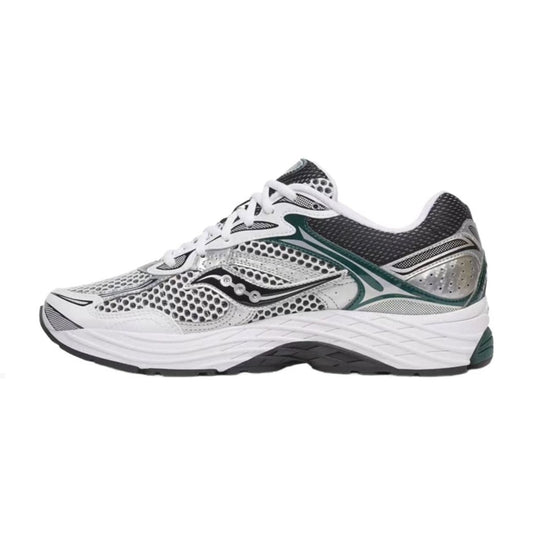
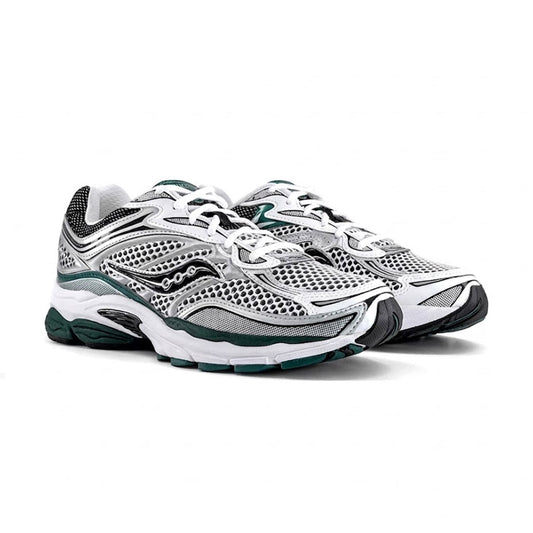
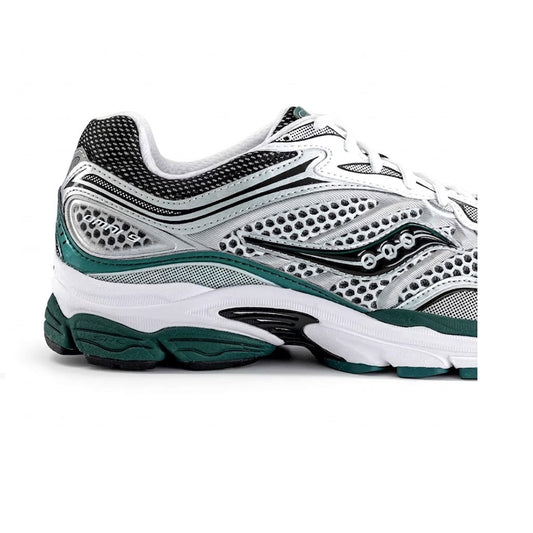
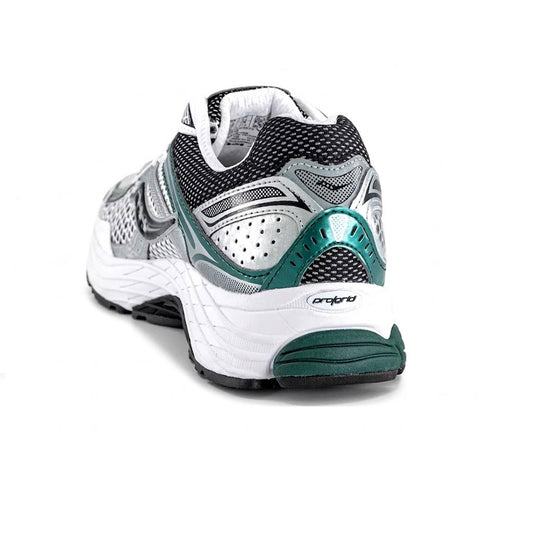
Best Saucony Trainers for Beginners: What to Look For
If you have never bought Saucony before, choosing your first pair can feel more complicated than it really is. There are different models, different types of cushioning, different levels of support and different ways a trainer can be used. It is easy to look at all of that and wonder where you are supposed to start.
But a beginner does not need to understand the entire Saucony range before buying a pair.
A better place to start is much closer to home: your own feet, the way the trainer feels on them and what you actually expect to do in it.
Your first pair of Saucony should not begin with a model or a number. It should begin with knowing what a good fit feels like.
That changes the way you approach the purchase. Instead of asking only whether Saucony runs large or small, or whether one model is supposed to be better than another, you begin to ask more useful questions. Does the heel feel secure? Does the midfoot feel supported without being squeezed? Do the toes have enough freedom? Does the trainer make sense for the way you intend to use it?
For a first-time buyer, those questions create something more valuable than a simple recommendation: a way to understand why a trainer is right for you.
You Do Not Need to Know Saucony Before Buying Your First Pair
One of the easiest mistakes for a new buyer is to assume that they need to learn Saucony before they can choose Saucony.
That can quickly turn a straightforward purchase into a technical exercise. You may encounter different cushioning systems, geometries, drops, support concepts and model families before you have even worked out what you want the trainer to do for you.
None of that needs to come first.
The first question is much simpler: what do you want your trainers to help you do?
Someone looking for a comfortable pair to walk around the city, travel in, commute in or wear for several hours has a different starting point from someone who wants to run occasionally. Someone who wants one pair to cover walking, light training and everyday wear has another set of priorities. And someone who needs more support should not simply choose whichever trainer appears to have the most cushioning.
This is why the idea of a single “best Saucony trainer for beginners” can be misleading.
The best first pair is not necessarily the most advanced model, the most cushioned model or the one with the longest list of technical features. It is the trainer that makes sense for the person wearing it.
That is the first piece of knowledge a beginner needs.
Start With Your Foot, Not the Number
Once you know what you want the trainer to do, the next step is understanding how it should sit on your foot.
This is where sizing can become confusing for someone buying Saucony for the first time. Your usual trainer size is a useful starting point, but the number alone cannot tell you whether the shoe is actually right for your foot.
A good fit is a relationship between the foot and the trainer.
The heel should feel secure without being painfully tight. The midfoot should hold the foot comfortably rather than allowing it to move excessively from side to side. At the front, the toes should have enough room to move naturally without feeling as though the foot is floating inside the shoe.
In other words, the goal is not simply to make the shoe feel tight enough that it cannot move.
It is to find security without restriction and space without looseness.
That distinction is particularly important when you are new to a brand. A sensation that feels unfamiliar is not automatically a sign that something is wrong. Likewise, a very roomy trainer is not necessarily a more comfortable one.
The useful question is not simply “Does this number fit?”
It is:
“Does this trainer hold my foot in the right places while allowing it to move naturally?”
That is a much better way to begin understanding your first Saucony.
Learn the Difference Between Secure and Tight
The heel is one of the first places where a beginner can misinterpret what they are feeling.
A well-fitting trainer should generally keep the heel reasonably secure as you move. You do not want to feel as though your heel is lifting significantly with every step, because excessive movement can make the whole trainer feel less stable.
But secure does not mean squeezed.
There is an important difference between a trainer that holds the heel in place and one that creates pressure around it. The first can give you a feeling of control. The second can become distracting and uncomfortable as you spend more time wearing the shoe.
The same principle applies around the midfoot.
The trainer should feel connected to your foot rather than completely loose around it, but that does not mean every part of the upper should press firmly against you. Support should feel like control, not compression.
This is particularly useful for someone buying their first pair because unfamiliarity can make a normal feeling of structure seem excessive. A trainer with a more secure heel or a more supportive midfoot may initially feel different from a casual sneaker you have worn before.
What matters is what that structure is doing.
If it keeps the foot stable while allowing you to move comfortably, it is contributing to the fit. If it creates persistent pressure, numbness or discomfort, the problem is different.
Learning to recognise that distinction is more useful than memorising a particular size.
Learn What Useful Space Feels Like
The other side of the equation is space.
A beginner can sometimes assume that if there is visible room between the toes and the front of the trainer, the shoe must be too large. That is not necessarily the case.
Your toes need room to move.
The foot does not remain completely static when you walk, run or spend a long period standing. The way the foot interacts with the trainer changes as you move, and the amount of freedom that feels appropriate can depend on what the shoe is being used for.
This is why space is not the opposite of a good fit.
The problem is not having room. The problem is having the wrong kind of room.
Useful space allows the toes to move without repeatedly contacting the front of the shoe. Excessive space, by contrast, can allow the foot to move around inside the trainer and make the shoe feel less controlled.
That gives a beginner another useful distinction:
freedom is not the same as looseness.
It is one of the simplest ways to understand trainer fit without becoming an expert in footwear terminology.
And it also explains why the same sensation cannot always be judged in isolation. A little more freedom can make sense in a trainer intended for dynamic movement, while an everyday lifestyle trainer may create a different overall feeling.
The question is always how the different parts of the trainer work together.
A Trainer Can Fit in Length and Still Feel Wrong
Length is only one dimension of fit.
This is particularly important when someone discovers that their toes have enough space but the sides of the trainer feel uncomfortable. A common reaction is to assume that the shoe needs to be longer.
But if the length already feels appropriate, increasing it may simply create more space at the front without solving the real problem.
The issue may be width.
A trainer can have an appropriate length while feeling restrictive across the forefoot or other areas of the foot. For some buyers, particularly those with wider feet, the shape and available width of the trainer can therefore have a greater influence on comfort than simply changing the numerical size.
This is where a beginner can make an important mental shift.
Instead of thinking:
“The shoe feels tight, so I need a bigger size.”
it can be more useful to ask:
“Where does it feel tight?”
If the pressure is primarily across the sides while the length otherwise feels right, the problem may not be the number at all. Depending on the model, a different width option or a different construction may provide a more precise solution.
That is an important lesson because turning a width problem into a length problem rarely improves the overall fit.
The Right Fit Depends on What You Will Actually Do
There is another reason why beginners can struggle with choosing their first Saucony: the word “comfortable” means different things in different situations.
A trainer that you wear for a short walk is not necessarily being asked to do the same job as one you wear while running. A pair used for travelling may need to remain comfortable through hours of walking and standing. A versatile everyday trainer may need to work across several different parts of your routine.
The foot is part of that equation.
When you move, the way your foot interacts with the trainer changes. Running, walking and extended periods on your feet place different demands on the shoe, which is why there is no universal rule that says every Saucony should be worn with exactly the same amount of space or should feel identical.
This is also why rules such as “always size up” or “always stay with your usual size” are too simplistic to explain the whole experience.
The more useful starting question is:
What am I actually going to do in these trainers?
If your main priority is everyday comfort, you may value a trainer that feels natural across long periods of walking and ordinary daily use. If you want to combine running with other activities, versatility becomes more important. If you are looking for a trainer that gives you more support, stability may become a more relevant consideration than simply maximising softness.
Your routine gives meaning to the features.
You Do Not Need to Understand Every Saucony Technology Yet
Once a beginner starts looking at Saucony, it is easy to encounter technical language before understanding why it matters.
There is nothing wrong with learning about cushioning systems, geometry, drop or the different technologies used across the range. Those details can become genuinely useful when you already know what kind of experience you are looking for.
But they do not need to be the first lesson.
A new buyer does not need to memorise every Saucony technology before deciding whether a trainer feels appropriate. First identify the experience you want. Then use the technical information to understand how the shoe is designed to create it.
That order makes the information much easier to use.
Instead of seeing a technical feature and asking whether it is “better”, you can ask a more meaningful question:
What does this feature actually contribute to the way I want the trainer to feel?
That is a much more useful way for a beginner to navigate a technical footwear range.
Simplifying the choice does not mean giving the buyer less information.
It means presenting the information in the order in which they can actually use it.
First comes the person. Then the foot. Then the intended use. Then the type of trainer. The technical details can explain the choice afterwards.
Reduce the Choice to the Experience You Want
Once you approach the purchase this way, the enormous range of possibilities becomes much easier to understand.
A beginner does not necessarily need to compare every Saucony model against every other model. They can start by identifying the kind of experience they want.
Perhaps the priority is everyday comfort: a trainer that can be worn around the city, while travelling or through long ordinary days.
Perhaps it is versatility: one pair that can cover walking, some training and occasional running without feeling overly specialised.
Perhaps the priority is greater support and stability because the way the trainer behaves underfoot matters more than simply having the softest possible ride.
Or perhaps the goal is simply an accessible first experience of Saucony without needing a highly specialised trainer.
These are not technical categories that the buyer has to memorise. They are ways of translating an ordinary routine into a footwear requirement.
And that is often enough to make the next stage of the decision much easier.
Then Choose the Type of Saucony That Matches That Need
Only after understanding the foot and the intended use does it make sense to start comparing individual trainers.
This is where a first-time buyer can begin looking at different Saucony models with a much clearer idea of what they are trying to find.
Instead of asking:
“Which Saucony is the best?”
the question becomes:
“Which type of Saucony is designed around the experience I want?”
That difference matters.
A beginner who wants an everyday trainer does not necessarily need the same characteristics as someone whose priority is running. Someone looking for versatility may make a different choice from someone who already knows that support is particularly important to them.
The model is therefore not the starting point.
It is the answer to the questions that came before it.
This also makes model comparisons more useful. Once you know whether comfort, versatility, support, everyday wear or running is your priority, technical differences between trainers stop being abstract specifications and start becoming relevant to your own routine.
Your First Saucony Should Teach You Something About Your Own Feet
There is another benefit to approaching the purchase this way.
Your first pair can become a reference point for future purchases.
Once you understand how a well-fitting trainer feels on your own foot, you have something much more useful than a number stored in your memory. You begin to recognise your own preferences.
You may discover that you prefer a secure heel but more freedom around the toes. You may realise that pressure across the forefoot is a sign that you need to pay more attention to width. You may find that you prefer a particular balance between cushioning and stability. Or you may discover that the trainer you enjoy most is not the most technically sophisticated one, but the one that feels natural throughout your day.
That knowledge becomes portable.
It can help you evaluate another Saucony later, and it can also make it easier to understand why two apparently similar trainers can feel different on your feet.
In that sense, the first purchase is not just about finding a pair of trainers.
It is about developing a better understanding of what your feet actually need.
A Good Deal Cannot Fix the Wrong Trainer
This becomes particularly relevant when you are shopping around major sale periods.
A discount can make an attractive trainer even more tempting, especially when you are buying towards the end of the year. But the price should come after the fundamentals.
A good offer does not turn an unsuitable trainer into a suitable one.
Before focusing on the discount, it is worth being clear about four things:
what you will use the trainer for, how your foot should feel inside it, whether the length and width are appropriate, and what kind of experience you actually want from the shoe.
Once those things are clear, comparing prices and models becomes much easier because you are no longer choosing simply because something happens to be available at a lower price.
The same principle applies when buying online.
The goal is not to eliminate every uncertainty before placing the order. That is unrealistic when you cannot physically try the trainer on.
The goal is to reduce the uncertainty that actually matters.
Knowing your foot, understanding the intended use and recognising the difference between secure and restrictive, or spacious and loose, gives you a much stronger basis for making that decision.
The Best Beginner Saucony Is the One That Makes Sense to You
For someone buying Saucony for the first time, the temptation is to look for a definitive answer: the best model, the safest size or the trainer everyone else recommends.
But there is rarely one answer that makes sense for every beginner.
The more useful approach is to build the decision from the ground up.
Start with your foot.
Think about how the trainer should feel when you move in it, not just how it looks when you are standing still.
Look for security without uncomfortable pressure. Give your toes enough freedom without allowing the foot to move excessively inside the shoe. Pay attention to width rather than assuming every uncomfortable sensation can be solved by changing the length.
Then think about your routine.
Are you looking for everyday comfort? Do you want versatility? Will you run in the trainer? Do you need more support? Will you spend several hours walking or standing in it?
Only then does the model become the central question.
And that is perhaps the most useful lesson for a first-time Saucony buyer:
you do not need to know everything about Saucony to make a good first choice. You need to know enough about your own needs to recognise why a particular trainer makes sense.
The goal is not to find a trainer that simply fits.
It is to recognise why it fits.
When that happens, choosing your first Saucony becomes much less about guessing the right number or finding the “best” model and much more about understanding the relationship between your foot, your routine and the trainer you are putting on.
That is what turns a first purchase into a confident one.