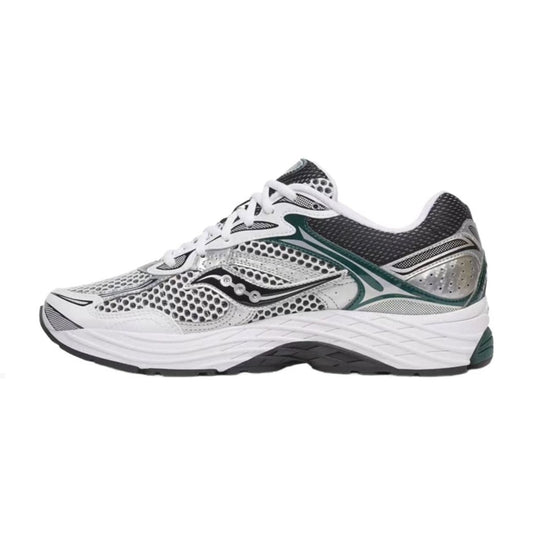
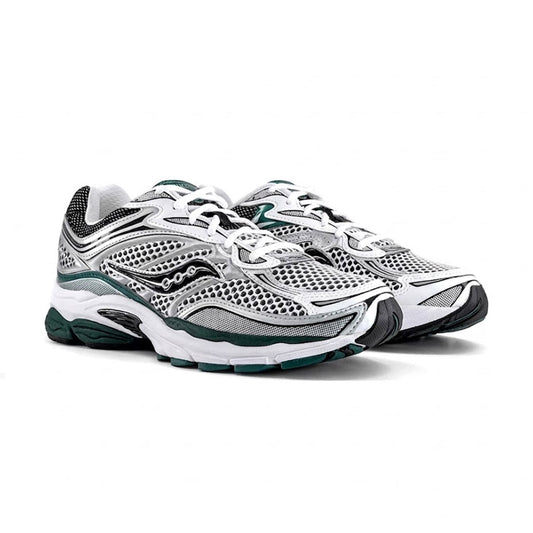
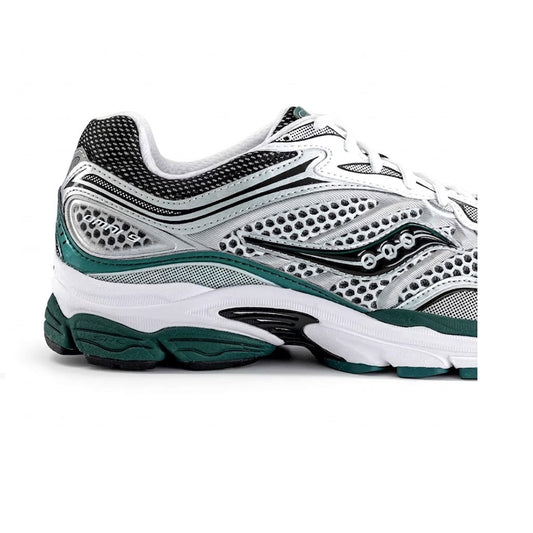
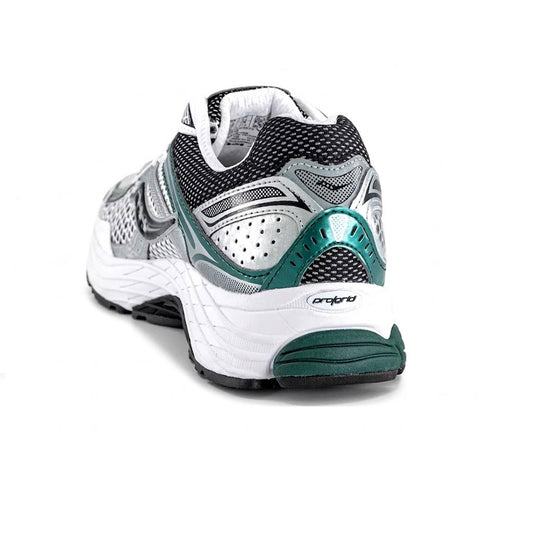
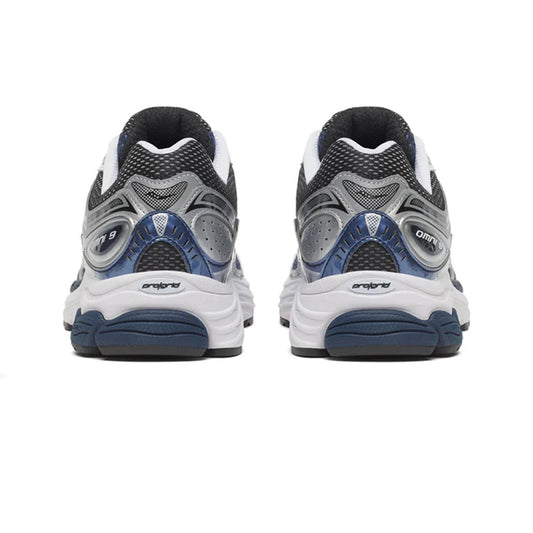
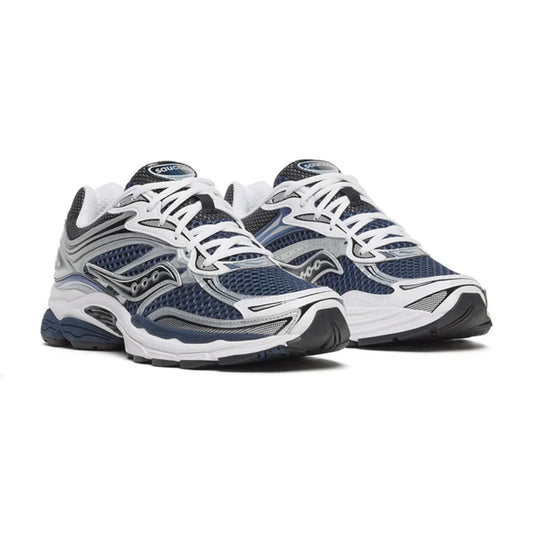
Saucony Trainer Fit Guide: How Should Saucony Trainers Fit?
Choosing the right Saucony trainer is only the beginning of the experience. The real test comes afterwards: how does the shoe feel once you are actually wearing it? A well-fitted Saucony should allow your foot to move naturally while keeping it comfortably controlled. The heel stays where it should, the midfoot feels secure without being compressed, and the toes have enough freedom to move. The shoe does its job quietly, without constantly reminding you that you are wearing it.
That experience matters because a pair of Saucony trainers may become part of much more than one activity. You might use them for running and later wear them for walking around the city. You might choose a lifestyle silhouette for everyday outfits and find yourself reaching for it whenever you know you will spend several hours on your feet. When the fit is right, the shoe can move naturally between those situations.
This is why the number on the box is only the beginning of the story. Once you have chosen your size, the more important question becomes whether the shoe is actually behaving well on your foot.
What Should a Well-Fitted Saucony Feel Like?
A good fit should feel secure without making the foot feel restricted. When you walk, the heel should remain controlled rather than lifting repeatedly inside the shoe. When you change direction, your foot should not slide excessively from side to side. When you pick up the pace, your toes should have enough room to move without repeatedly reaching the front of the trainer.
The sensation you are looking for is therefore not tightness. It is control without restriction.
A correctly fitted Saucony trainer should hold the foot securely through the heel and midfoot while leaving the front of the foot sufficiently free. You should feel supported, but not squeezed; stable, but not trapped. Once that balance is achieved, the shoe becomes easier to forget because your attention can remain on where you are going rather than on what your feet are tolerating.
That is one of the simplest ways to recognise a good fit: the shoe becomes part of the movement rather than something you have to manage throughout the day.
Your Heel Should Stay Secure Without Pressure
The heel is one of the first places where you can tell whether a trainer is working properly on your foot.
If your heel repeatedly lifts as you walk, or if the foot moves noticeably inside the shoe, there may be too much internal movement. A small amount of natural movement is not unusual, but you should not feel as though your foot is constantly trying to escape the shoe.
Tightening the laces can sometimes improve the sensation, but they should not have to compensate for an unsuitable fit. When the heel is correctly positioned, the rear of the trainer should feel naturally secure rather than aggressively tightened around the ankle.
That difference becomes increasingly noticeable with time. A heel that feels slightly unstable for a few minutes can become much more distracting after an hour of walking, particularly when the shoe is being used repeatedly throughout the day.
The better fit is therefore the one that continues to feel controlled after the initial excitement of putting a new pair on has disappeared.
The Midfoot Should Feel Supported, Not Compressed
The middle of the trainer should provide a similar feeling of confidence.
Your midfoot needs enough control to keep the foot positioned correctly, particularly when the trainers are being used for walking, training or running. But that control should not come from excessive pressure across the top or sides of the foot.
If you find yourself repeatedly loosening the laces because the upper feels restrictive, that is useful information. The shoe may be holding the foot too aggressively for your particular shape, or there may simply not be enough internal volume where you need it.
The ideal sensation is subtler. You should notice that the shoe is supporting your foot without constantly noticing the support itself.
This is particularly valuable in a versatile trainer. A pair that feels comfortable for ten minutes but becomes restrictive after several hours may work for a quick outing, but it is unlikely to deliver the same value from a full day of walking, commuting, travelling or casual wear.
Your Toes Need Room to Move
Then there is the front of the shoe, where comfort often depends on having enough space without creating unnecessary movement.
A trainer can feel perfectly acceptable when you first put it on and become noticeably different after you have been moving for a while. Your feet can increase slightly in volume during activity, while the way they load and move can also change. A toe box that feels just sufficient while standing still may therefore become restrictive once you start walking for longer periods or running.
For everyday or lifestyle use, approximately 0.5 cm of space between the longest toe and the front of the shoe can provide a useful starting point for a comfortable, contained fit. The objective is not to create a large empty space in front of the toes, but to give them enough freedom to move without making the trainer feel unnecessarily long.
For running and more dynamic activities, the experience can be different. As the foot warms up and experiences repeated impact and forward movement, approximately 1 to 1.5 cm of space in front of the toes can provide additional room for that change. What may initially look like generous space can become much more useful after several kilometres, particularly when moving downhill or when the foot naturally shifts forward inside the shoe.
The important point is not to treat these measurements as an automatic rule for every Saucony trainer. They are useful ways of thinking about what your foot may need from the shoe once you start using it.
And this is why a trainer should not be judged only by how it feels during the first few seconds of trying it on. Think about what your feet will be doing after thirty minutes, after several hours or after several kilometres.
The right fit should still feel right later.
That is where the experience of a good purchase begins to reveal itself.
A Good Fit Is Not Just About Length
Length is only one part of how a trainer feels on your foot.
If your toes feel compressed against the sides even though there is sufficient room in front, the problem may not be that the shoe is too short. It may be that the available width or internal volume does not correspond well with the shape of your foot.
This distinction is important because a shoe can be long enough and still feel uncomfortable. Your toes may have plenty of room in front but insufficient room from side to side. Conversely, a trainer can feel spacious without actually providing the kind of control your foot needs.
A wider option, such as a Wide version when available, may provide a more appropriate experience. The objective is to find the combination of length, width and internal volume that allows the foot to remain comfortably positioned.
When that combination is right, you should notice less unwanted movement, less pressure around the toes and a more natural sensation as the foot moves through each step.
This is also why two people can wear the same numerical size and experience completely different results. Foot shape matters. One person may need more room across the forefoot, while another may feel more comfortable in a narrower construction.
The important question is therefore not simply whether the trainer is long enough. It is whether the entire interior of the shoe gives your foot the space and control it needs.
The Fit Should Match the Way You Use Your Saucony
A well-fitted trainer does not have to feel identical in every situation.
A pair used mainly for everyday walking and casual wear can prioritise a natural, comfortable sensation over long periods of ordinary movement. A trainer used for running has to accommodate a more dynamic relationship between the foot and the shoe.
That difference becomes particularly noticeable as time and movement accumulate.
During an ordinary day, you may walk, stand, climb stairs, sit down, get back up and continue moving. During a run, the foot experiences repeated loading, forward movement and changes in volume. A good fit should make sense for the activity you actually intend to perform.
This is why a Saucony trainer can be considered successful not only when it feels comfortable in the first few minutes, but when its fit continues to make sense as the activity changes.
For someone wearing a lifestyle pair around the city, that might mean reaching the end of a long afternoon without pressure around the toes or unnecessary movement at the heel. For someone running, it might mean having enough room for the foot to move naturally without repeatedly striking the front of the trainer.
The same principle applies when the shoe becomes part of an outfit. Comfort does not stop being relevant simply because the primary purpose is casual wear. If a pair looks right but becomes uncomfortable after an hour, its usefulness becomes much narrower than it initially appeared.
The Best Fit Is the One You Notice Less Over Time
Ultimately, the best indication that your Saucony trainers fit correctly is surprisingly simple: you stop thinking about the fit.
Your heel stays comfortably in place. Your midfoot feels supported without pressure. Your toes have room to move. You can walk naturally, spend hours on your feet and, when appropriate, increase the pace without the shoe suddenly becoming the main thing you notice.
This is where the difference between a new pair that merely fits and a pair that truly works becomes apparent.
A shoe that constantly needs adjustment remains present in your attention. You tighten the laces, loosen them again, shift your foot, wonder whether your toes have enough room or notice your heel moving every few steps. None of these sensations necessarily appears dramatic on its own, but together they can change how enjoyable the shoe is to wear.
A good fit works in the opposite direction.
The longer you wear it, the less you need to think about it.
Think About the Experience After You Buy
That is particularly important when you are buying a trainer that you expect to use in several parts of your life.
A good fit can allow the same purchase to become part of a morning walk, a training session, a day of running errands or an everyday outfit. Instead of feeling like a shoe that only works for one specific moment, it becomes something you can rely on more often.
This is where the value of the purchase becomes easier to understand.
The benefit is not simply that the shoe felt comfortable when you tried it on. It is that the fit continues to support what you actually wanted from the purchase: movement without distraction, stability without pressure and enough freedom to use the trainer in the situations that matter to you.
The value of choosing the right Saucony fit is something you discover after the purchase, not simply at the moment you place the order.
Choose well and the shoe should continue to feel coherent with what you expected from it: comfortable when you need comfort, secure when you need control and natural when you simply want to move through the day.
The Real Test of a Saucony Trainer Comes Later
A sizing decision happens before the experience. Fit is what you discover through the experience itself.
Once the number has been chosen, the real question is whether your foot can move naturally inside the trainer, whether the shoe remains secure without becoming restrictive and whether those sensations continue to make sense after minutes become hours and ordinary movement becomes something more demanding.
That is why the best-fitting Saucony is not necessarily the one that feels most noticeable when you first put it on.
It is the one that gradually disappears.
You stop thinking about your heel. You stop thinking about the laces. You stop thinking about whether your toes have enough room. You simply walk, run, train, travel, spend the day outside or put the trainers on as part of an outfit.
The right fit does not just make a Saucony trainer feel better today. It allows the shoe to keep making sense tomorrow, next week and across the different moments you bought it for.
That is the real experience of getting the fit right.